An MCAS flare or mast-cell-type reaction can be hard to explain later because the episode may involve more than one body system at once: skin, gut, breathing, heart rate, blood pressure, dizziness, swelling, or a sudden “allergic reaction” feeling.
A useful note does not try to prove what caused the episode. It preserves the details your clinician may need: what happened, when it started, which body systems were involved, what was nearby, what you took, whether symptoms improved, and whether the episode affected safety or daily function.
MCAS diagnosis is complex and should stay with clinicians. Tracking is for organization, not self-diagnosis.
Start with safety first
If you have symptoms of anaphylaxis or a severe reaction, follow your emergency plan, use prescribed emergency medication if directed, and seek emergency care.
Do not keep tracking instead of getting help for:
- trouble breathing
- throat, tongue, lip, or face swelling
- wheezing or stridor
- fainting
- severe lightheadedness or low blood pressure symptoms
- chest pain
- confusion or feeling unsafe
- a reaction your clinician told you should be treated as urgent
The log can be completed later. Safety comes first.
Record which body systems were involved
MCAS discussions often focus on episodes that involve more than one body system. That is why a body-system note is more useful than a single symptom label.
Track symptoms by group:
- skin: flushing, itching, hives, rash, swelling
- gut: abdominal pain, cramping, diarrhea, nausea, vomiting, reflux
- breathing: wheezing, cough, shortness of breath, throat tightness, stuffy nose
- cardiovascular: fast pulse, palpitations, low blood pressure symptoms, fainting
- neurologic or general: dizziness, lightheadedness, headache, sudden weakness, brain fog, fatigue
You do not need to decide whether the episode “counts.” Just record what happened clearly.
Add timing and sequence
Timing helps your clinician see whether episodes repeat in a recognizable way.
Log:
- start time
- how quickly symptoms built
- first symptom
- worst symptom
- peak time, if you know it
- when symptoms started improving
- total recovery time
- whether symptoms returned later
Example:
| Time | What happened |
|---|
| 12:20 | Ate lunch |
| 12:45 | Face flushing and itching started |
| 12:55 | Nausea and cramps, 6/10 |
| 1:05 | Took clinician-approved as-needed medication |
| 1:40 | Symptoms easing |
| 3:00 | Still tired, canceled errands |
That kind of sequence is easier to review than “bad reaction after lunch.”
Track possible triggers as context, not proof
Possible triggers can be useful, but they are not proof by themselves. A nearby food, smell, temperature change, medication, infection, or stressful event may matter, or it may be coincidence.
Useful context includes:
- food or drink
- alcohol
- heat, cold, showering, or sudden temperature change
- fragrance, smoke, cleaning products, or chemical odors
- pollen, pets, mold, or environmental exposure
- exercise or physical stress
- emotional stress
- infection or illness
- poor sleep
- menstrual cycle context, if relevant
- new medication, missed dose, dose change, supplement, or contrast exposure
- insect sting or bite
Write “possible trigger” rather than “cause” unless a clinician has confirmed the relationship.
Keep medications and safety actions beside the symptoms
For each episode, record:
- medications or treatments you took
- time taken
- whether they were prescribed, over the counter, or part of your plan
- whether symptoms improved, worsened, or stayed the same
- whether you used emergency medication
- whether you contacted a clinician, urgent care, or emergency services
Do not use a tracker to decide medication changes on your own. Use it to keep the sequence clear for the person managing your care.
Add recovery and functional impact
Recovery is part of the episode.
Write down:
- how long you needed to rest
- whether symptoms fully cleared
- lingering fatigue, brain fog, headache, GI symptoms, or dizziness
- whether you missed work, school, errands, exercise, cooking, driving, or caregiving
- whether you needed help from someone else
“Flushing and diarrhea” is useful. “Flushing and diarrhea after lunch, took as-needed medicine, needed to lie down for two hours, and missed work call” is much more useful for appointment prep.
A simple MCAS flare note template
Use this when you need a quick structure:
- Time: when it started and how long it lasted.
- Body systems: skin, gut, breathing, cardiovascular, neurologic, general.
- Symptoms: strongest symptoms and severity.
- Possible context: food, heat, fragrance, illness, stress, meds, activity.
- Actions: medication, emergency plan, clinician contact, rest.
- Recovery: time to improve and lingering symptoms.
- Impact: what the episode stopped you from doing.
- Appointment question: what should we review next?
Even a partial note is better than relying on memory after a scary or exhausting episode.
What to bring to the appointment
Before a visit, summarize:
- how often episodes happen
- the most common symptom groups
- any episodes involving breathing, swelling, fainting, or emergency actions
- possible repeated contexts you want to discuss
- medication or treatment response notes
- recovery time and functional impact
- your top questions
Good questions might include:
- “Do these episodes meet criteria for MCAS evaluation, allergy evaluation, mastocytosis evaluation, or another workup?”
- “Which symptoms should be treated as urgent for me?”
- “What should I record during the next episode?”
- “Do any medications or exposures need review?”
- “Should any labs be timed around acute episodes?”
Source context
Helpful background:
Where Zebra fits
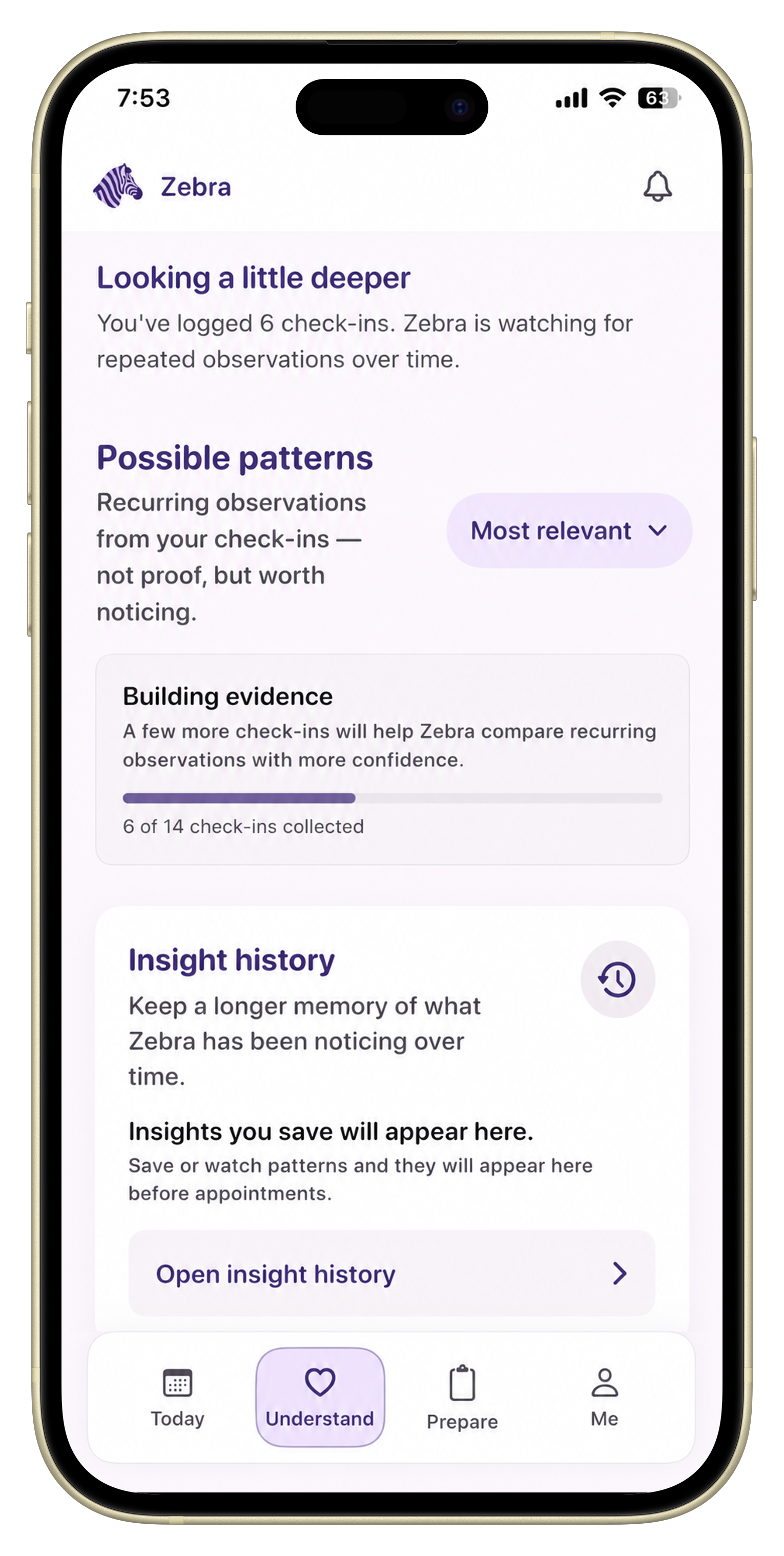
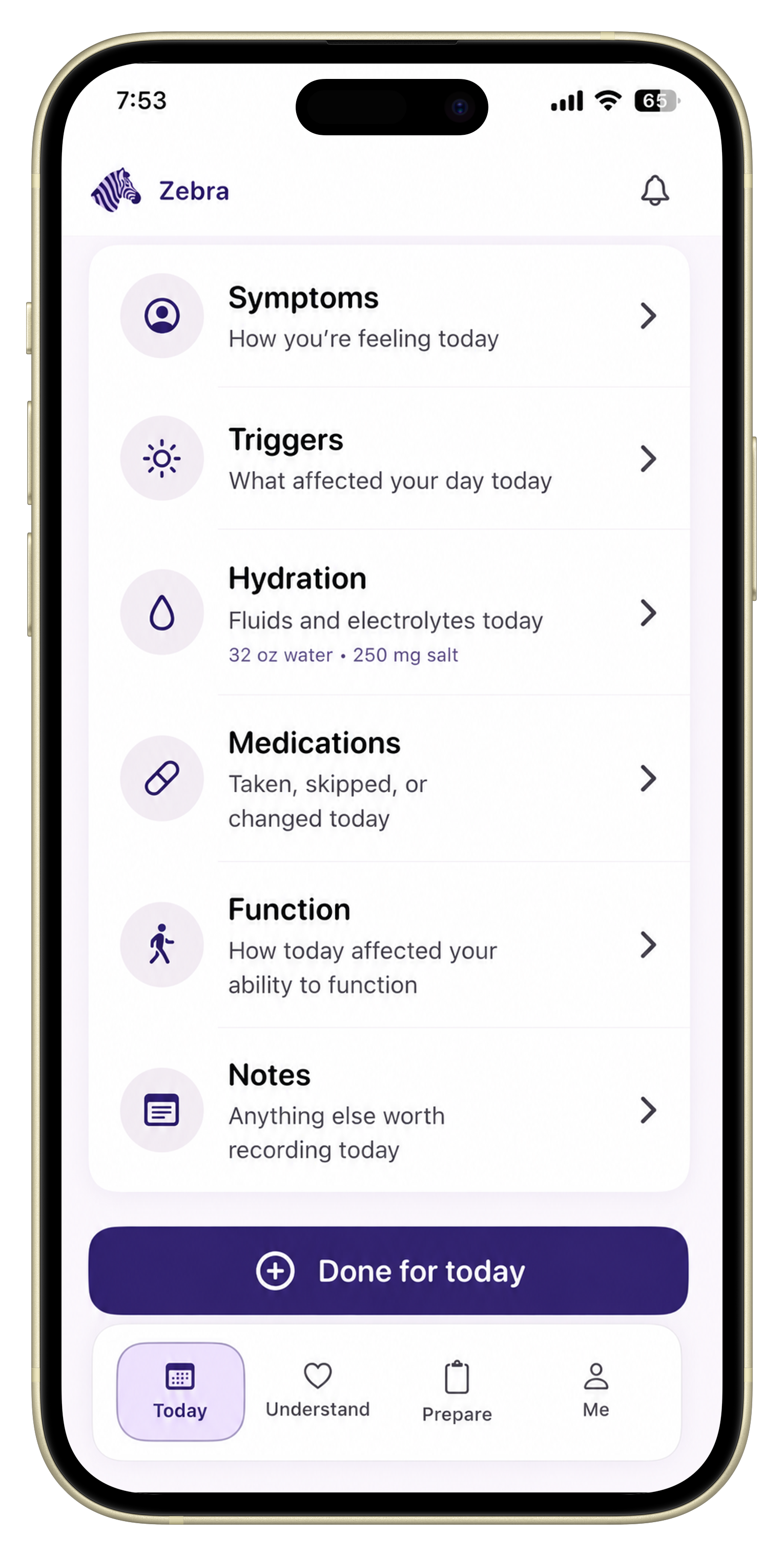
Zebra helps keep flares, triggers, symptoms, medications, notes, functional impact, and appointment questions in one timeline.
It does not diagnose MCAS or interpret reactions. It helps you bring a clearer episode history to the clinician who can.
Key takeaways
- Track MCAS-style episodes by body system, timing, possible context, actions, and recovery.
- Treat possible triggers as context, not proof.
- Record urgent symptoms and safety actions clearly.
- Do not change treatment based on the log alone.
- The best output is a concise appointment summary and better questions.
FAQ
What should I log during an MCAS-style flare?
Log the time, symptoms, body systems involved, possible triggers, medication context, safety actions, recovery time, and what the episode stopped you from doing.
Can tracking diagnose MCAS?
No. MCAS diagnosis requires clinical criteria and clinician interpretation. Tracking can organize episode history for a medical visit.
Should I treat possible triggers as proof?
No. Treat possible triggers as context. Food, heat, stress, fragrance, infection, medication changes, or exertion near an episode can be useful to discuss without proving cause.
When should I seek emergency care?
Seek emergency help for symptoms of anaphylaxis or severe reactions, such as trouble breathing, throat swelling, fainting, severe low blood pressure symptoms, or if your clinician has told you to use emergency medication.
Is Zebra medical advice?
No. Zebra helps organize patient-entered history for appointments. It does not diagnose, treat, or replace medical care.
Put this into practice
Download Zebra
Use Zebra to keep MCAS-style symptoms, triggers, medications, safety notes, recovery, and appointment questions in one timeline.
Download Zebra