Meals can change symptoms for people with POTS, dysautonomia, EDS, MCAS-type reactions, reflux, nausea, bowel changes, migraine, or fatigue. The tricky part is that the pattern is often not just “food.” Timing, posture, hydration, salt, medication timing, heat, activity, stress, and flare state can all sit beside the meal.
A meal and GI symptom tracker is not a diet plan and it cannot diagnose a food intolerance, allergy, gastroparesis, MCAS, IBS, POTS, EDS, or any other condition. It helps you bring a clearer timeline to the clinician who can evaluate what is happening.
Start with meal timing and symptom timing
You do not need to record every ingredient at first.
Start with:
- meal or snack time
- rough meal size: small, usual, large
- whether you were sitting, standing, or lying down afterward
- when symptoms started
- how long symptoms lasted
- whether symptoms improved with rest, fluids, salt, medication, or time
- what the symptoms stopped you from doing
Example: “Lunch 12:20, large meal, sat upright afterward. At 12:50, nausea 6/10, heart racing, lightheaded when standing. Lay down 30 minutes, improved by 2:00.”
That gives your clinician a sequence, not just a vague memory.
Track GI symptoms in plain language
Use everyday labels your clinician can quickly scan:
- nausea
- bloating
- abdominal pain or cramping
- reflux or burning
- early fullness
- vomiting
- diarrhea
- constipation
- urgent bathroom trips
- loss of appetite
- trouble finishing meals
Add severity only if it helps. A simple 0 to 10 score can work, but a functional note is often more useful: “could not finish lunch,” “missed class,” “needed bathroom urgently,” or “could not drive after dinner.”
Keep orthostatic symptoms nearby
Post-meal notes are more useful for POTS and dysautonomia when GI symptoms stay connected to orthostatic symptoms.
Track whether the meal was followed by:
If you already measure heart rate or blood pressure as part of your care plan, note the number and position: lying, sitting, or standing. Do not start intensive monitoring if it makes symptoms or anxiety worse; ask your clinician what is useful.
Add hydration, salt, and medication context
For many people with autonomic symptoms, meal notes make more sense when hydration, salt, and medication timing are visible.
Useful context:
- water or electrolyte intake before the meal
- salt intake if your clinician has recommended it
- missed fluids
- caffeine or alcohol
- compression garments
- medication timing
- missed doses or recent dose changes
- new supplements
- heat, showering, or standing before or after eating
Do not change salt, fluids, medications, or supplements based on an app record alone. Use the record to ask better questions.
Treat possible food triggers as clues, not proof
It is tempting to label one meal as “the cause,” especially when symptoms are scary. A tracker is better when it separates observation from conclusion.
Write:
- “possible trigger: large meal”
- “possible trigger: spicy food”
- “possible trigger: dairy”
- “possible trigger: high histamine food”
- “possible trigger: ate after poor sleep”
- “possible trigger: meal after shower”
That wording leaves room for other explanations. Repeated patterns are more useful than one intense episode.
Include flare state and recovery
Meals may feel different on flare days than on baseline days.
Add:
- whether you were already in a flare
- baseline symptoms that morning
- sleep quality the night before
- stress, illness, period, travel, or exertion
- how long recovery took
- whether you returned to baseline
- whether the rest of the day changed
Recovery matters because a mild GI symptom that causes a two-hour crash may be more important than a brief symptom spike.
What to summarize before the appointment
Before a GI, cardiology, primary care, allergy, or EDS appointment, summarize:
- symptoms that happen most often after meals
- time from meal to symptom start
- whether large meals differ from small meals
- whether symptoms are worse standing after eating
- heart rate or blood pressure context, if measured
- hydration and salt context
- medication timing questions
- foods or situations that repeat as possible triggers
- weight change, vomiting, blood in stool, fainting, severe pain, dehydration, or other urgent symptoms
- what symptoms changed in work, school, driving, cooking, errands, or caregiving
Useful questions:
- “Could meal timing or meal size be affecting my symptoms?”
- “Should I track heart rate or blood pressure after meals, and if so, how?”
- “Do these GI symptoms need further evaluation?”
- “Could medication timing, hydration, salt, or compression be relevant?”
- “What symptoms should be urgent?”
Source context
Helpful background:
Where Zebra fits
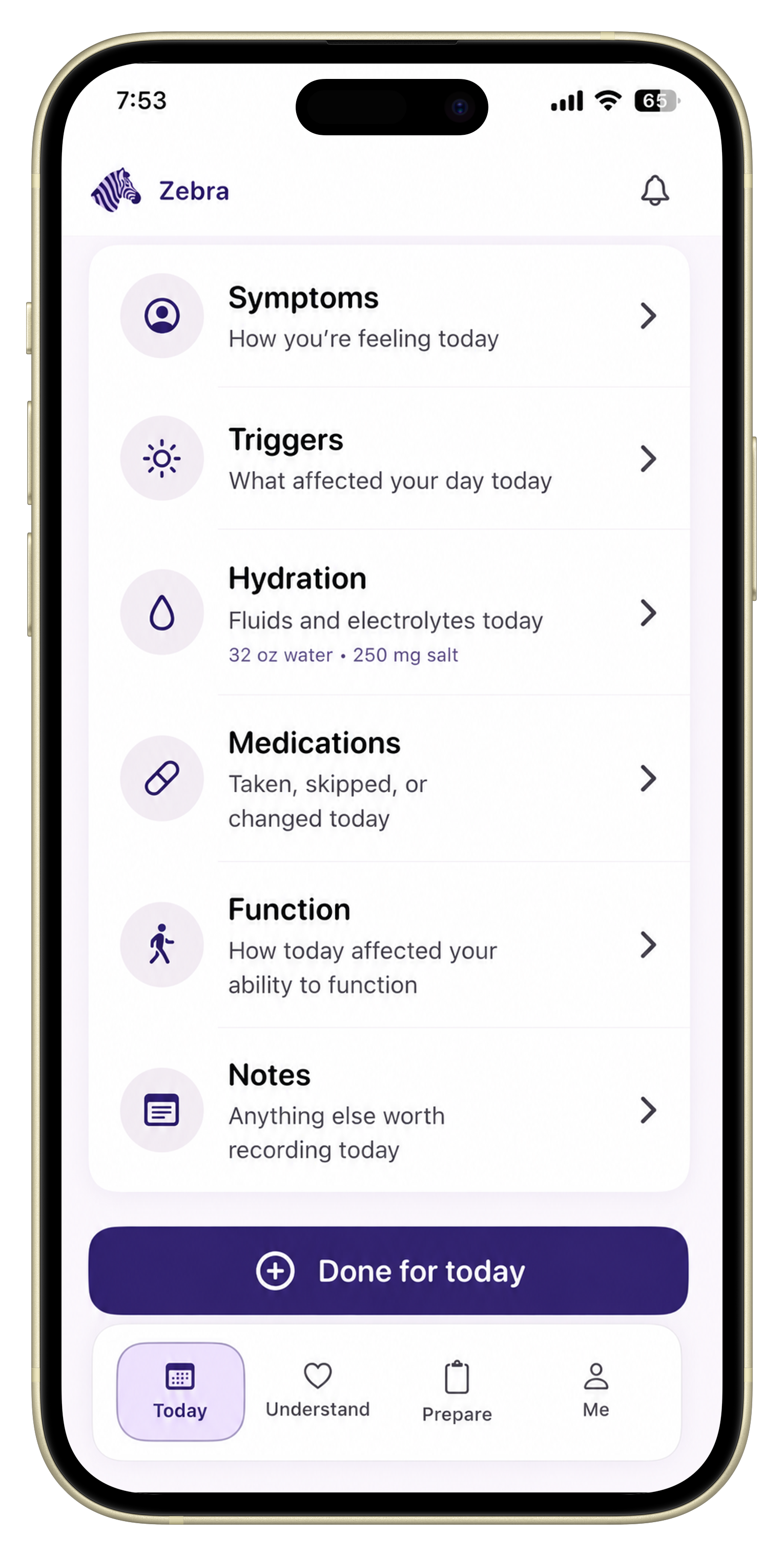
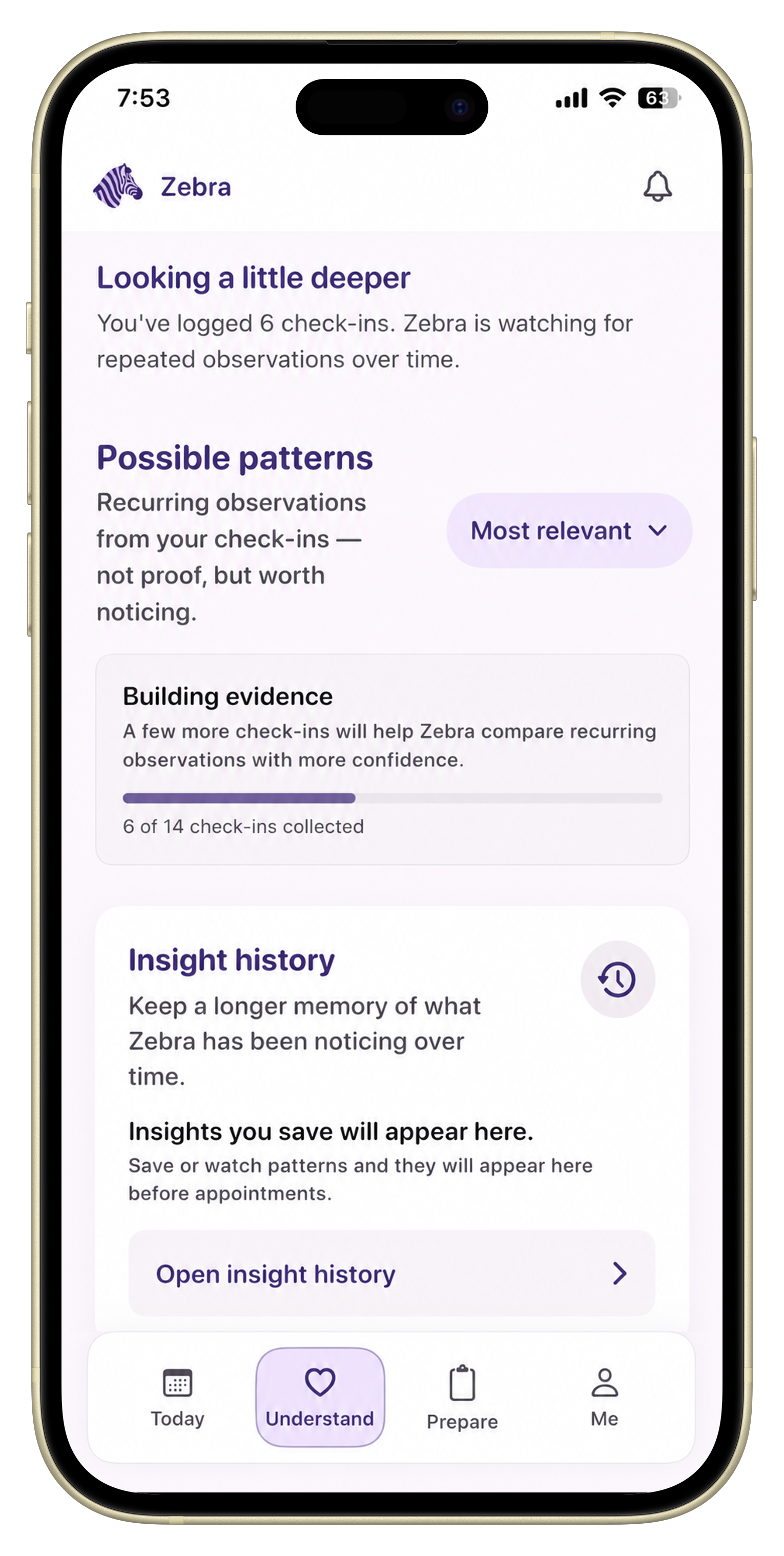
Zebra helps keep meal timing, GI symptoms, orthostatic symptoms, fluids, salt, medications, possible triggers, recovery, and appointment questions in one timeline.
It does not diagnose food reactions or GI conditions. It helps you bring a clearer post-meal symptom pattern to the clinician who can evaluate it.
Key takeaways
- Track meal timing, symptom timing, GI symptoms, orthostatic symptoms, hydration, salt, medications, and recovery together.
- Start with meal size and timing before trying to log every ingredient.
- Treat possible food triggers as clues, not proof.
- A short, consistent record can make post-meal symptoms easier to discuss at appointments.
Put this into practice
Download Zebra
Use Zebra to keep meal context, GI symptoms, dizziness, heart rate, hydration, salt, medications, and appointment questions in one timeline.
Download Zebra