Palpitations can feel like a racing heart, pounding, fluttering, skipped beats, flip-flops, or a sudden awareness of your heartbeat. For people with POTS, dysautonomia, orthostatic intolerance, anxiety overlap, medication changes, thyroid questions, Long COVID, or chronic illness flares, the hard part is often explaining the episode after it has passed.
A palpitations diary does not diagnose an arrhythmia, POTS, dysautonomia, or any heart condition. It helps you bring a clearer episode history to the clinician who can decide what needs evaluation.
Start With The Episode Basics
A useful note starts with what happened and when.
Track:
- start time
- end time or total duration
- what it felt like: racing, pounding, fluttering, skipped beats, irregular, forceful
- whether it started suddenly or gradually
- whether it stopped suddenly or gradually
- what you were doing when it started
- whether you were lying, sitting, standing, walking, exercising, showering, eating, or resting
- what helped it settle
Example: “Started 2:15 p.m. while standing in kitchen. Heart felt fast and pounding, HR 132 standing, lightheaded 6/10. Sat down, drank water, improved by 2:35.”
That gives your clinician a sequence, not just “my heart was weird.”
Add Heart Rate And Position If You Already Measure
If heart rate tracking is part of your care plan, note the number with the position.
Useful labels:
- lying
- sitting
- standing
- after standing for 2, 5, or 10 minutes
- after stairs
- after shower
- after meal
- after exercise
- resting in bed
The same heart rate can mean different things depending on posture and context. A racing heart after sprinting is different from a racing heart while lying down.
Do not start checking constantly if it makes symptoms or anxiety worse. Ask your clinician what frequency and format are useful.
Track Symptoms That Happened With It
Palpitations are more clinically useful when the connected symptoms stay visible.
Track whether you had:
- dizziness
- lightheadedness
- near-fainting or syncope
- chest pain, pressure, or tightness
- shortness of breath
- sweating
- nausea
- tremor or shakiness
- headache
- weakness
- blurry vision
- brain fog
- unusual fatigue afterward
- panic feeling or adrenaline surge
Seek urgent medical help for chest pain or pressure, fainting, severe shortness of breath, severe dizziness, confusion, or a racing or irregular heartbeat that does not resolve quickly.
Keep Possible Triggers Nearby
Palpitations can have many possible contributors. A tracker is most useful when it records context without jumping to a conclusion.
Possible context:
- standing up
- prolonged standing
- heat or hot shower
- exercise or exertion
- dehydration or missed fluids
- skipped meal
- large meal
- caffeine
- alcohol
- nicotine
- new medication or supplement
- missed dose
- stress or strong emotion
- poor sleep
- fever, infection, or illness
- menstrual cycle or hormone change
Write “possible trigger” rather than “cause” unless a clinician has confirmed the relationship.
Record Medication And Stimulant Context
Clinicians often ask what you take and when, including prescribed medications, over-the-counter medicines, supplements, caffeine, nicotine, and other stimulants.
Track:
- daily medication timing
- missed doses
- dose changes
- new medication or supplement
- decongestants or cold medicines, if relevant
- caffeine timing and amount
- alcohol, if relevant
- nicotine or other stimulant exposure
- whether symptoms changed after a medication change
Do not stop or adjust medication based on a diary alone. Use the record to ask safer, more specific questions.
Add Hydration, Salt, And Recovery
For POTS and dysautonomia, palpitations often overlap with hydration, salt, posture, and heat.
Record:
- water or electrolytes that day
- salt intake if your clinician recommends it
- whether you wore compression garments
- whether lying down helped
- whether sitting helped
- whether cooling helped
- how long recovery took
- whether fatigue, brain fog, nausea, or shakiness lingered
Recovery matters. A 5-minute palpitation episode with two hours of fatigue may be more important than the episode length alone.
Summarize Function, Not Just Numbers
Write down what the episode changed.
Examples:
- had to sit on the floor
- could not finish shower
- stopped cooking
- left store
- missed class
- could not drive
- canceled exercise
- needed help
- felt unsafe standing
- recovered and continued normally
Functional impact helps your clinician understand daily-life severity.
What To Bring To The Appointment
Before a cardiology, neurology, primary care, dysautonomia, Long COVID, or EDS appointment, summarize:
- how often palpitations happen
- average duration
- longest episode
- whether they happen at rest, standing, after meals, during showers, with heat, or with exertion
- highest heart rate if measured
- whether rhythm felt regular or irregular
- symptoms that came with the episode
- medication, caffeine, hydration, and salt context
- what helps them settle
- functional impact
- any urgent symptoms: chest pain, fainting, severe shortness of breath, severe dizziness, or confusion
Helpful questions:
- “Do these episodes need ECG, Holter monitoring, or other testing?”
- “What symptoms should be urgent?”
- “Should I record heart rate, blood pressure, or position during episodes?”
- “Could medication timing, caffeine, hydration, salt, heat, or standing be relevant?”
- “How many episodes should prompt follow-up?”
Source Context
Helpful background:
Where Zebra Fits
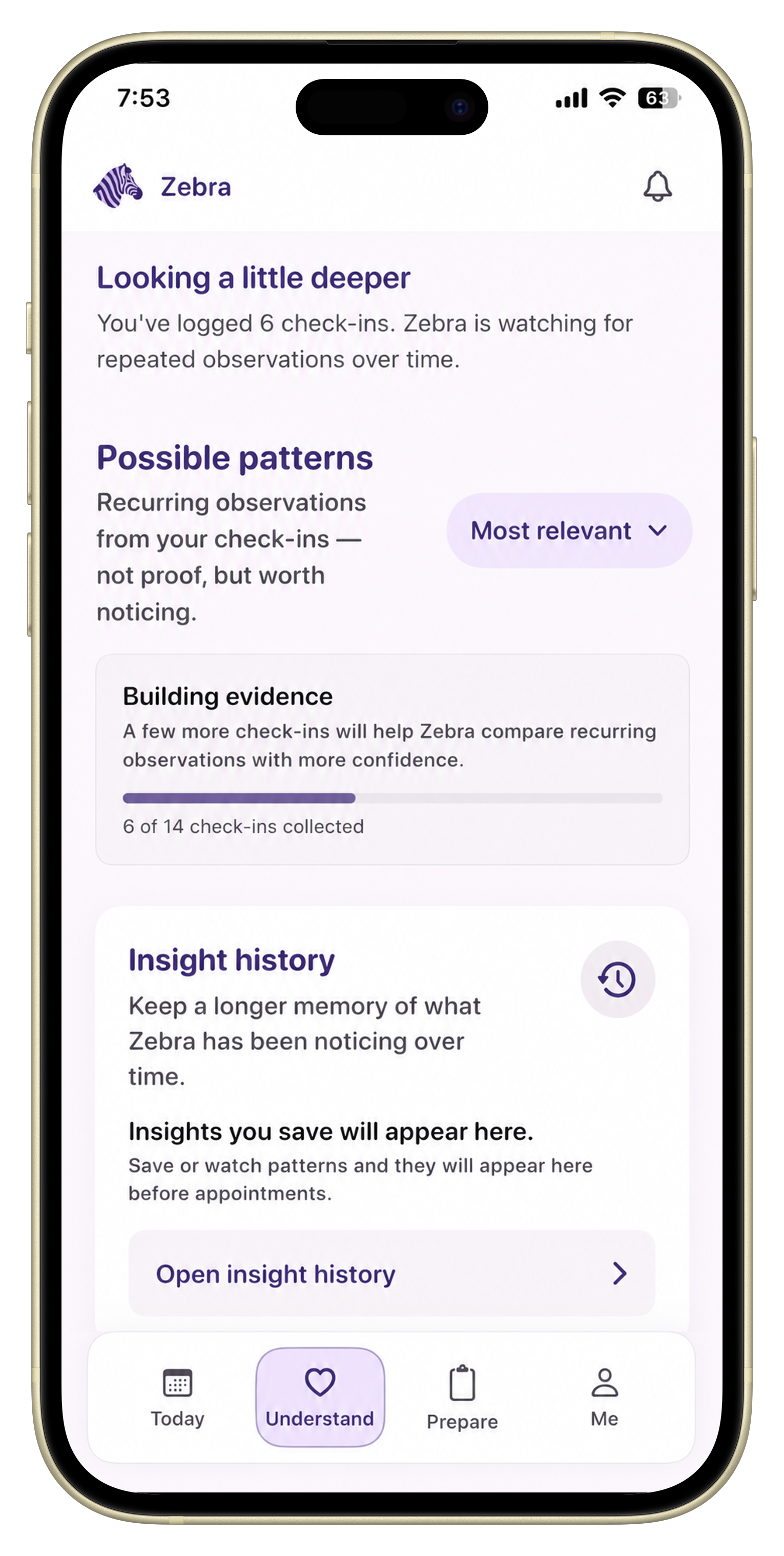
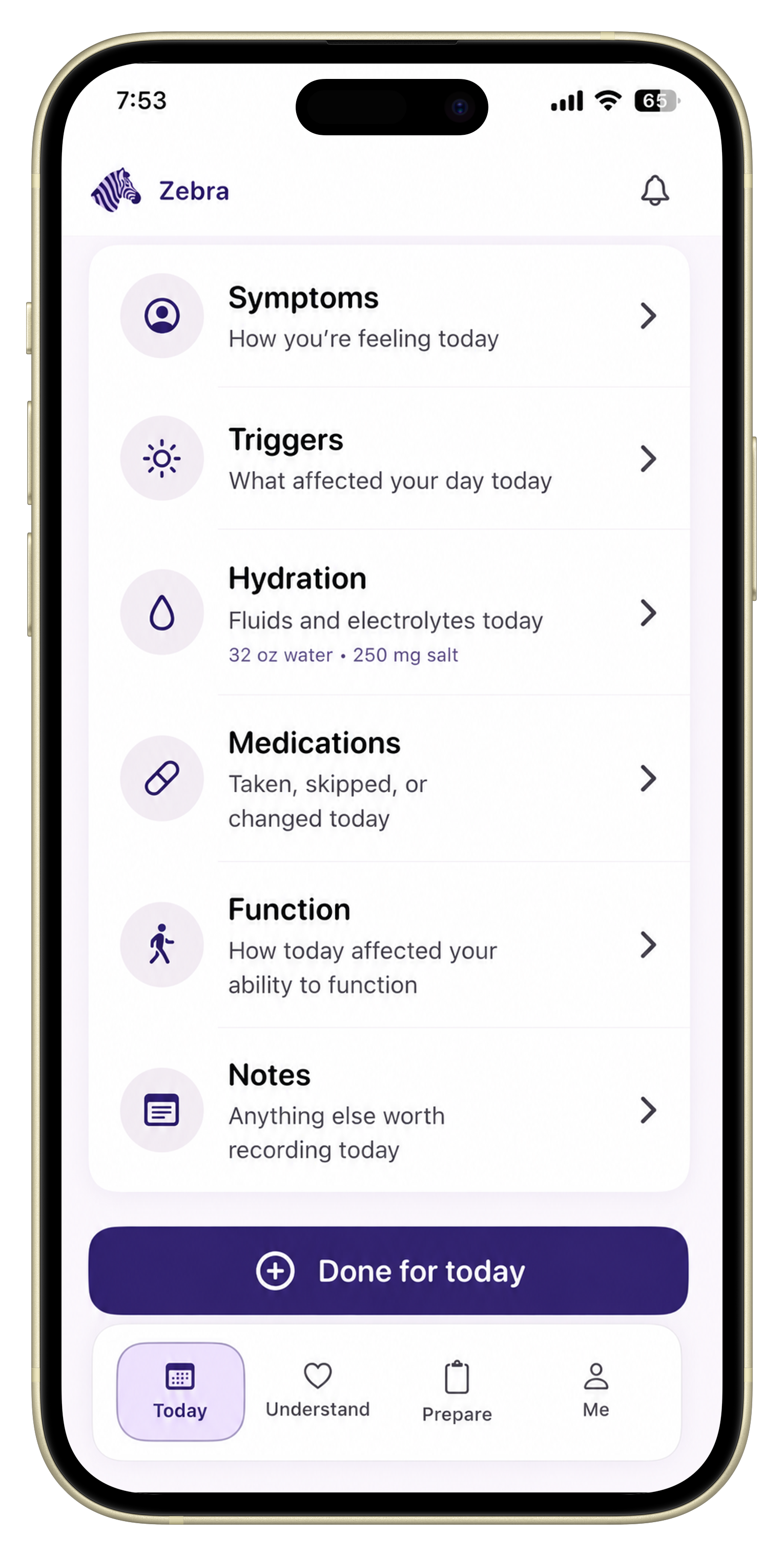
Zebra helps keep palpitations, heart rate context, posture, triggers, hydration, salt, medication timing, recovery, functional impact, and appointment questions in one timeline.
It does not diagnose palpitations or heart rhythm problems. It helps you bring a clearer, doctor-ready episode history to the clinician who can evaluate it.
Key Takeaways
- Track timing, rhythm feeling, heart rate if measured, posture, symptoms, triggers, medications, hydration, and recovery together.
- Palpitations with chest pain, fainting, severe shortness of breath, or severe dizziness need urgent care.
- Position matters: lying, sitting, standing, showering, and exertion tell different stories.
- A short, consistent episode diary can make cardiology or dysautonomia visits easier.
Put this into practice
Download Zebra
Use Zebra to keep palpitations, heart rate context, posture, triggers, hydration, medications, recovery, and appointment questions in one timeline.
Download Zebra