Heat can turn a manageable day into a symptom-heavy day for many people with POTS, dysautonomia, EDS or HSD overlap, Long COVID, ME/CFS, migraine, or chronic illness flares. A hot room, summer weather, a warm shower, standing in a line, public transit, cooking, exercise, or low fluids can all sit in the same timeline.
A heat intolerance symptom tracker does not diagnose POTS, dysautonomia, heat illness, MCAS, EDS, or any other condition. It helps you bring a clearer pattern to a clinician: what the heat exposure was, what symptoms followed, what helped, how long recovery took, and what the episode changed in your day.
Start with the heat context
You do not need a perfect weather log. Start with the exposure that mattered.
Track:
- hot day
- warm room
- hot shower or bath
- sauna, hot tub, or heated pool
- standing in line
- cooking near heat
- car, train, bus, or plane without enough cooling
- outdoor event
- exercise or walking in heat
- fever, illness, or infection
If you know the temperature or humidity, add it. If not, use plain language: “warm apartment,” “humid bus,” “hot shower,” or “outside in sun for 20 minutes.”
Connect heat to symptoms and timing
Heat notes are more useful when they show sequence.
Record:
- when exposure started
- when symptoms started
- first symptom
- worst symptom
- how long symptoms lasted
- what helped
- how long recovery took
- whether symptoms returned later
Example: “Hot shower 8:10 a.m., stood for 12 minutes. By 8:25, heart racing, weak legs, dizzy 7/10. Lay down, drank electrolytes, improved by 9:15 but fatigue lasted until lunch.”
That kind of note is easier to review than “heat wiped me out.”
Track orthostatic symptoms near the heat note
For POTS and dysautonomia, heat often overlaps with upright posture.
Track whether heat was followed by:
If you already measure heart rate or blood pressure as part of your care plan, note the number and body position: lying, sitting, standing, or after showering. Do not start intensive monitoring if it makes symptoms or anxiety worse; ask your clinician what is useful.
Add hydration, salt, and medication context
Heat-triggered symptoms may look different depending on fluids, salt, medication timing, and other supports.
Useful context:
- water before and during heat exposure
- electrolytes
- salt intake if your clinician recommends it
- missed meals
- caffeine or alcohol
- medication timing
- missed dose or recent medication change
- compression garments
- cooling vest, fan, mist, ice pack, shade, or air conditioning
- time of day
Do not change salt, fluids, medications, or supplements based on a tracker alone. Use the pattern to ask better questions.
Track shower and bath details separately
Hot showers are a common practical problem because they combine heat, standing, humidity, and arm movement.
If showers trigger symptoms, note:
- water temperature: cool, warm, hot
- shower length
- standing or sitting
- whether you washed hair
- symptoms during shower
- symptoms after shower
- whether cooling, sitting, or pre-hydration helped
- how long you needed to recover
This can help you discuss realistic daily-life changes with a clinician or occupational therapist without reducing the problem to “I do not tolerate showers.”
Separate heat from other possible triggers
Heat may be one part of a larger stack.
Write possible context like:
- “heat plus standing”
- “heat plus skipped lunch”
- “heat plus poor sleep”
- “heat plus period”
- “heat plus infection”
- “heat plus exertion”
- “heat plus medication change”
This wording avoids treating heat as the only cause when several factors may have combined.
Record recovery and functional impact
Recovery is part of the story.
Write down:
- how long you needed to rest
- whether you returned to baseline
- whether you had fatigue later
- whether brain fog, headache, nausea, or dizziness lingered
- whether you missed work, school, errands, cooking, driving, showering, exercise, or social plans
- whether you needed help from someone else
“Recovered after 20 minutes” and “lost the rest of the day” are very different patterns, even if the first symptoms looked similar.
What to summarize before the appointment
Before a cardiology, neurology, primary care, EDS, Long COVID, or dysautonomia appointment, summarize:
- which heat situations trigger symptoms most often
- whether hot showers are different from hot weather
- whether standing time makes symptoms worse
- whether symptoms improve with lying down or cooling
- hydration and salt context
- heart rate or blood pressure context, if measured
- cooling strategies that helped or did not help
- how long recovery usually takes
- functional impact
- any fainting, chest pain, severe shortness of breath, confusion, or heat illness concerns
Helpful questions:
- “Should I track heart rate or blood pressure during heat-triggered symptoms?”
- “Could heat, standing, hydration, salt, or medication timing be connected?”
- “Are hot showers a useful clue for my evaluation?”
- “What symptoms should be urgent?”
- “What practical cooling strategies are safe for my situation?”
Source context
Helpful background:
Where Zebra fits
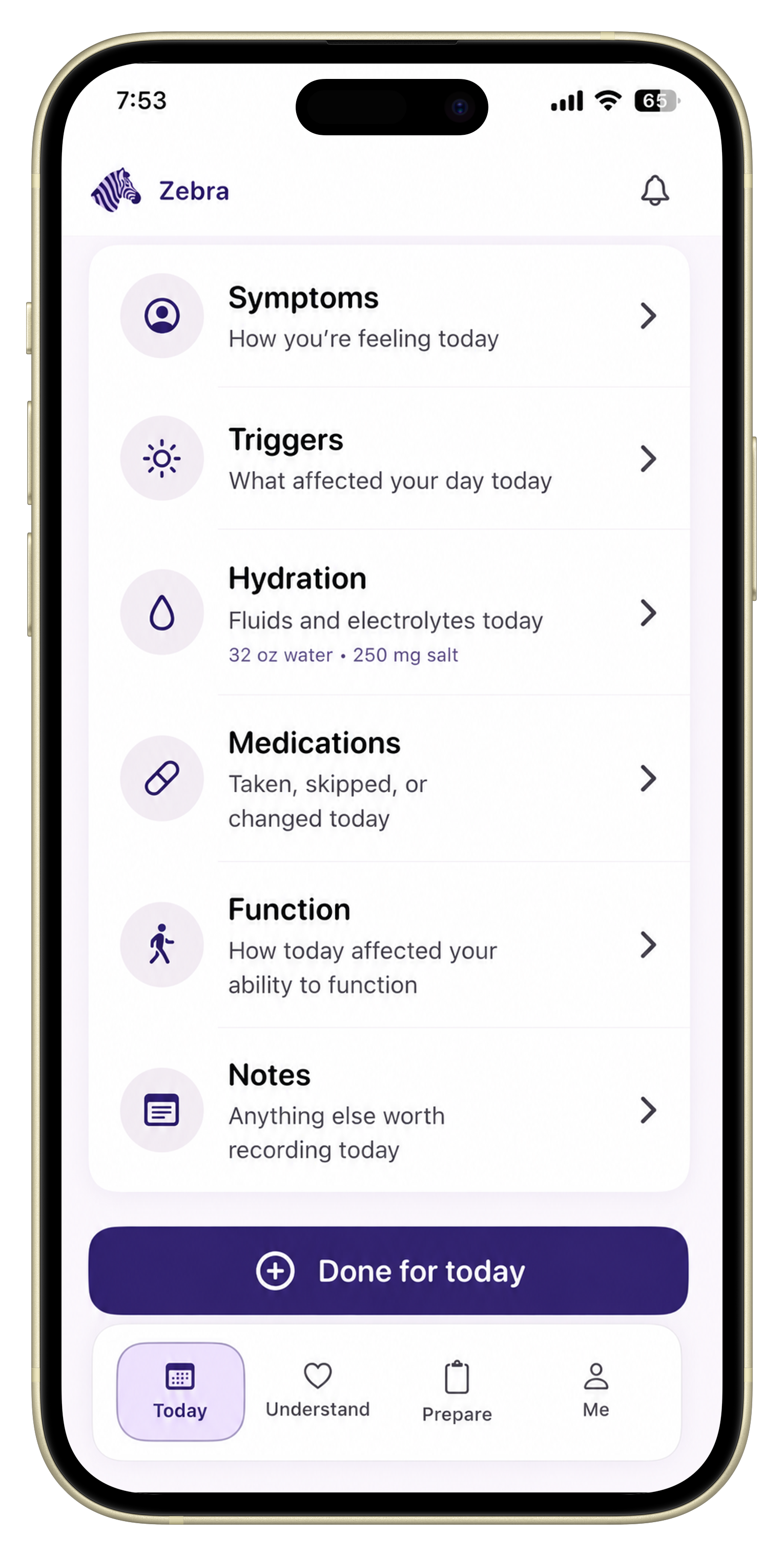
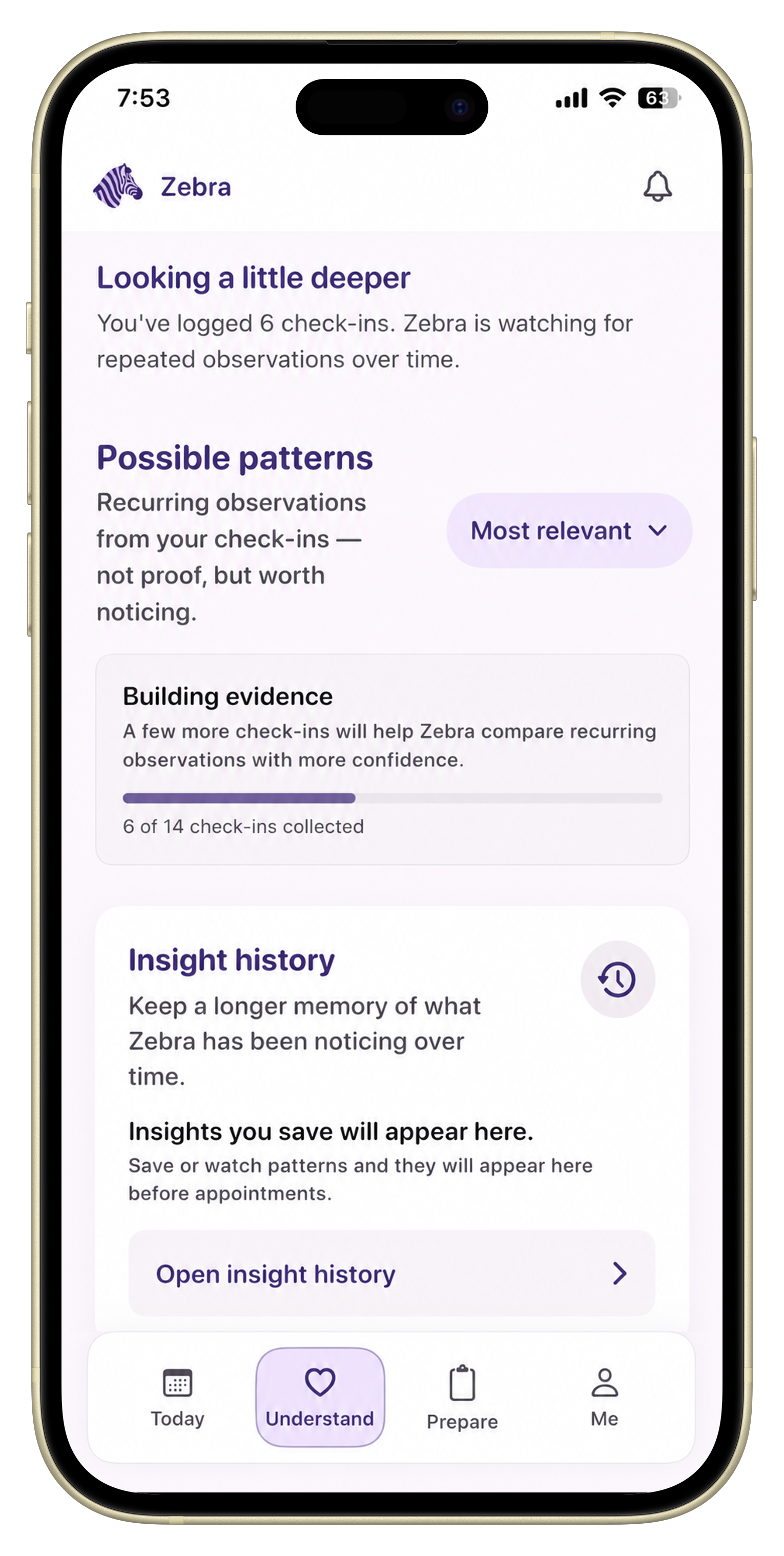
Zebra helps keep heat exposure, orthostatic symptoms, hydration, salt, medications, cooling strategies, recovery, and appointment questions in one timeline.
It does not diagnose heat intolerance or autonomic conditions. It helps you bring a clearer, doctor-ready heat pattern to the clinician who can evaluate it.
Key takeaways
- Track heat context, symptom timing, standing time, hydration, salt, medications, cooling actions, recovery, and functional impact together.
- Hot showers deserve their own notes because they combine heat, standing, humidity, and movement.
- Treat heat as context, not automatic proof of cause.
- A short, consistent heat diary can make symptom patterns easier to discuss at appointments.
Put this into practice
Download Zebra
Use Zebra to keep heat exposure, dizziness, heart rate, hydration, salt, cooling strategies, recovery, and appointment questions in one timeline.
Download Zebra