How to Track Symptoms When POTS, EDS, and MCAS Overlap
A practical tracking guide for people managing overlapping POTS, EDS or hEDS, and MCAS symptoms before appointments.

Zebra
For invisible chronic illness
Symptom Tracking
You do not need to track every meal, every weather change, and every stressful email to notice a pattern worth mentioning to a doctor. A short, consistent list of context beats an exhaustive one, and the goal is association worth discussing, not proof of a cause.
You do not need to track every meal, every weather change, and every stressful email to notice a pattern worth mentioning to a doctor. A short, consistent list of context beats an exhaustive one, and the goal is association worth discussing, not proof of a cause.
For people managing POTS, dysautonomia, EDS, fibromyalgia, or overlapping conditions, this matters because the instinct after a bad flare is often to track everything, just in case. That usually backfires. A long list is harder to keep up with, and more variables make any single pattern harder to see, not easier. A short list, tracked consistently, works better than a long list tracked for three days and abandoned.
The point of tracking context is to eventually notice something like “this shows up on most days I stand for a long time” or “this tends to follow a poor night of sleep.” That kind of observation is genuinely useful, both for your own pacing and for a conversation with a specialist.
But that observation only becomes visible if the tracking is consistent enough to compare across days. A handful of categories tracked steadily will show you more than a long list tracked inconsistently, because you actually have something to compare.
It is also worth being clear about what tracking can and cannot do. It can show that a symptom and a piece of context showed up together repeatedly. It cannot confirm that the context caused the symptom, especially since several things usually change at the same time. That distinction matters, and it is one reason to treat this as association tracking rather than a search for a single cause.
Rather than tracking everything, start with the categories most people find relevant, and only expand if something specific applies to you:
Standing, prolonged upright time, or position changes. This is especially relevant for POTS and dysautonomia, where orthostatic symptoms are common. Cleveland Clinic lists standing frequently, such as waiting in line or shopping, among the situations that can trigger POTS symptoms.
Whether the prior night’s sleep was better or worse than usual. Sleep that does not leave you rested is part of several overlapping conditions. The CDC lists sleep problems among the required symptoms of ME/CFS, including not feeling better even after a full night’s sleep.
Hot rooms, hot showers, or warm weather. Cleveland Clinic lists warm environments, such as a hot bath or shower or a hot day outside, among POTS symptom triggers.
Physical, cognitive, or social exertion. This matters even more if you have post-exertional symptoms, since the effect may not show up until later. Cleveland Clinic also lists strenuous exercise as a POTS trigger.
Whether symptoms tend to cluster after eating, and roughly what kind of meal, without needing calorie-level detail. Cleveland Clinic notes that a large meal can make POTS symptoms worse, because the body sends more blood to digestion.
A stressful day, a packed schedule, or an emotionally difficult event, noted as context rather than as an explanation.
That is the full list. Most people do not need more than this to start noticing something real.
Some symptoms show up right away. Others, especially post-exertional malaise or payback from overdoing it, can appear hours later or the next day. The CDC says that with post-exertional malaise, symptoms typically worsen 12 to 48 hours after activity. If you only track context on the day symptoms happen, you will miss this entirely.
A simple fix: note context on ordinary days too, not just symptomatic ones. If a hard day tends to follow a demanding day by 12 to 48 hours, that pattern only becomes visible if the demanding day was also tracked.
Once you have a few weeks of short, consistent notes, look for repetition rather than a single strong moment.
Useful ways to describe what you notice:
Less useful, and worth avoiding:
An honest “there seems to be a pattern, but I am not certain” is more useful to bring to a clinician than an overstated one, because it invites the kind of clinical judgment that tracking alone cannot provide.
Some categories are tempting to track but usually add more burden than value:
If a category is not producing anything useful after a few weeks, it is reasonable to drop it rather than keep tracking it out of habit.
If you are short on energy, this is enough:
Over a few weeks, this short pair of notes is often enough to start seeing a pattern, without turning tracking into a research project.
More categories usually mean less clarity, not more. Start narrow and expand only if something specific seems relevant to you.
This misses delayed effects and makes it impossible to compare against ordinary days. Track context regardless of how the day feels.
A single instance is a data point, not a pattern. Look for repetition before treating something as likely.
Some patterns stay unclear for a while, and some never resolve into a clean answer. “No clear pattern yet” is a valid and honest result, not a sign that anything went wrong.
On harder days, this can shrink further:
That is still enough to add to the pattern over time.
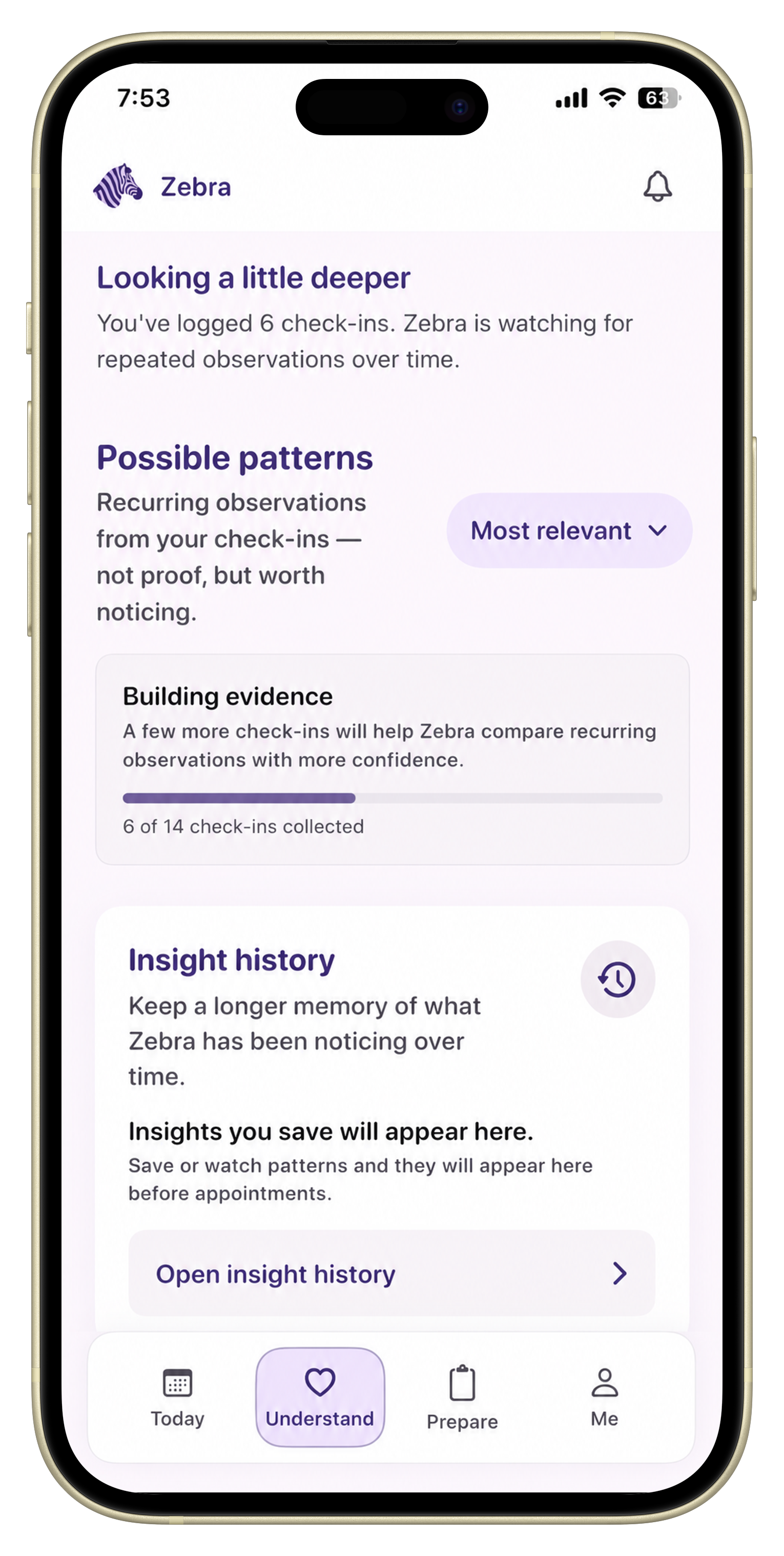
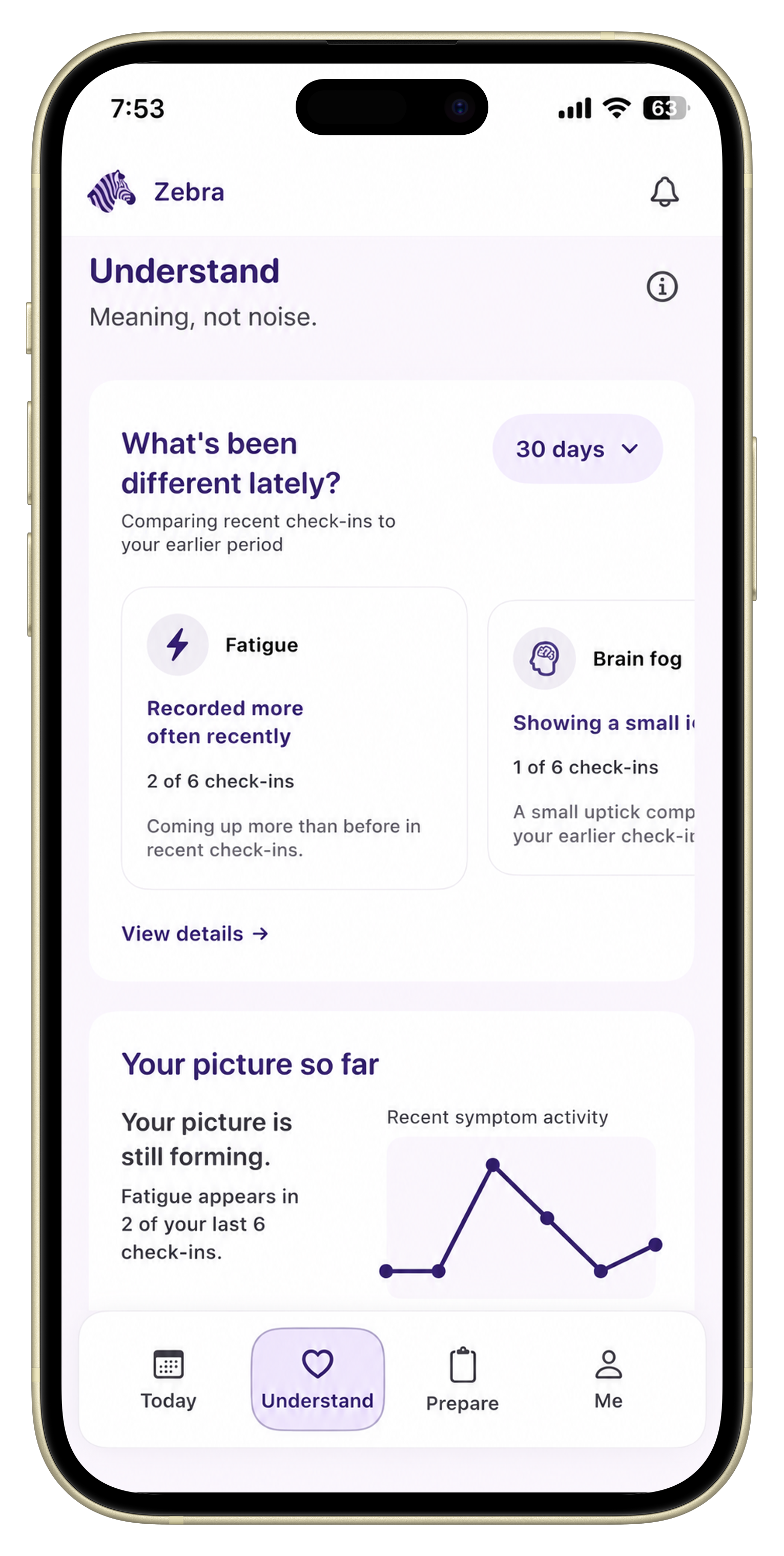
Zebra keeps a short, consistent set of context alongside your symptoms, so a pattern can surface without asking you to track everything.
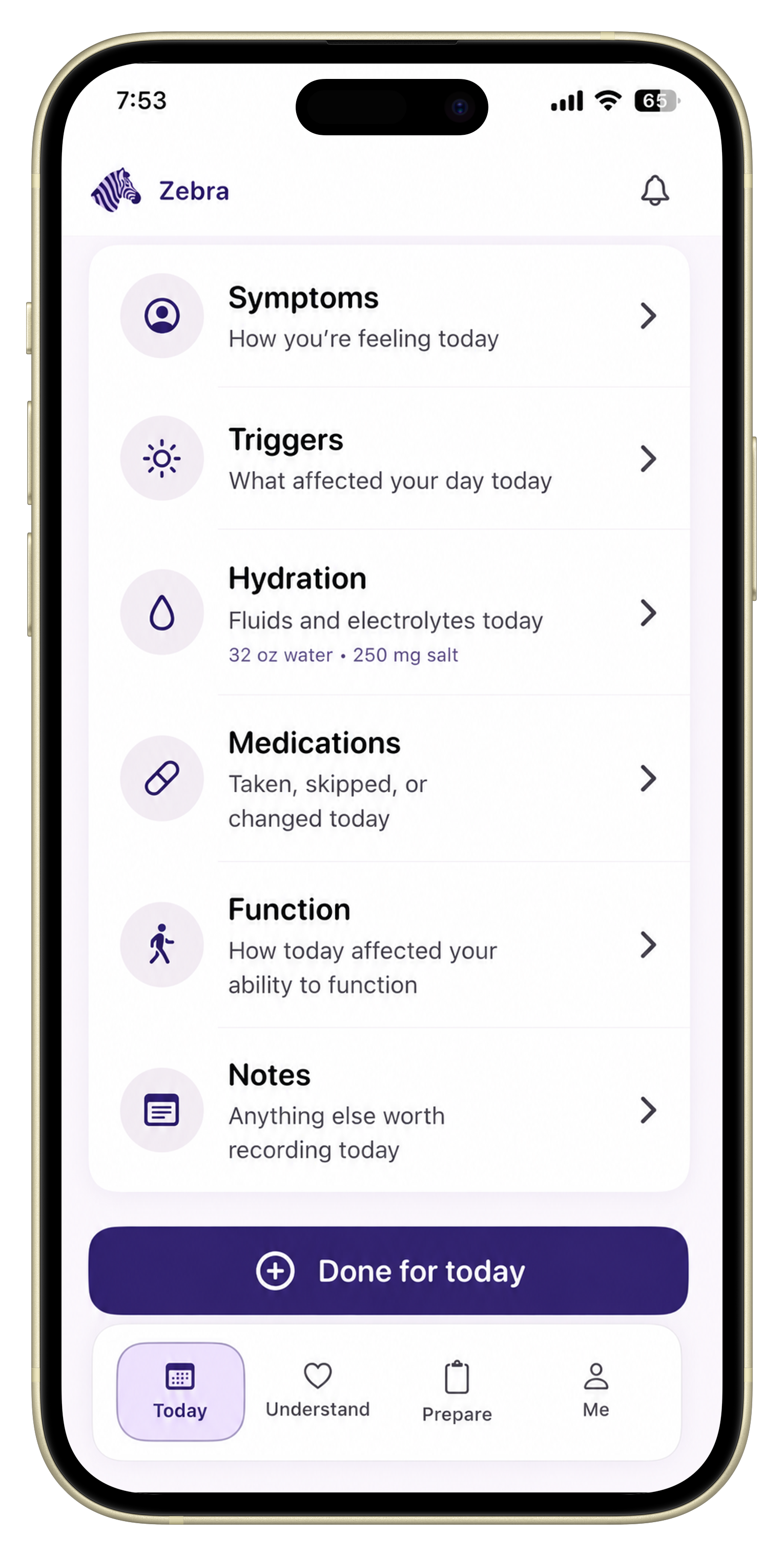
Instead of an open-ended list, Zebra’s daily check-in has quick tags for:
The guided orthostatic test separately records your heart rate lying down, standing and while you recover.
and shows repetition as an observation, described in plain terms like how often something showed up together, rather than as a confirmed cause. Zebra does not tell you what triggered your symptoms or predict future flares. It helps you keep the same short list of context day after day, so that if a pattern exists, it has a chance to become visible.
Trigger tracking is noting the context around a symptom or flare, such as standing, heat, poor sleep, or a stressful stretch, so patterns worth discussing with a clinician can surface over time. It is association tracking, not proof of cause.
A short list of three to six categories is usually enough: things like standing or posture, sleep, heat, activity, meals, and stress. Tracking everything at once makes patterns harder to see, not easier.
No. Tracking can show that a symptom and a piece of context showed up together repeatedly. It cannot confirm causation on its own, and several things often change at the same time, which is worth discussing with a clinician rather than concluding alone.
That is a valid and common result. Some symptoms do not have an obvious external pattern, and “no clear pattern yet” is useful information, not a failure of tracking.
Yes. Some symptoms show up hours later or the next day, especially with post-exertional malaise. It helps to note context even on days that feel fine, since the effect may not appear until later.
Keep the list short, treat findings as observations rather than rules, and remember that an association is a starting point for a conversation, not a verdict on what you can safely do.
Put this into practice
Download Zebra to keep symptoms and a short list of context together, so a real pattern is easy to spot without overtracking.
Download ZebraKnowledge hub
General information, not medical advice.
Keep exploring
A practical tracking guide for people managing overlapping POTS, EDS or hEDS, and MCAS symptoms before appointments.
A practical guide to tracking flushing, hives, GI symptoms, dizziness, breathing symptoms, possible triggers, medication context, and recovery.
A practical guide to tracking cycle-related flares, POTS symptoms, fibromyalgia pain, fatigue, brain fog, GI symptoms, medications, and appointment questions.
A practical guide to tracking migraine and headache days, symptoms, medication response, possible triggers, sleep, hydration, menstrual cycle context, and appointment-ready summaries.