Illness and Infection POTS Flare Tracker: What to Log
A practical guide to tracking sick-day POTS flares, infection symptoms, fever, hydration, salt, medication timing, heart rate, dizziness, fatigue, recovery, and doctor-ready summaries.

Zebra
For invisible chronic illness
Symptom Tracking
Cycle-related symptom tracking is most useful when period dates, flow, pain, fatigue, dizziness, palpitations, brain fog, sleep, GI symptoms, medications, activity, and functional impact stay together. The goal is not to blame hormones for everything. The goal is to bring clearer patterns to your clinician.
For some people, chronic illness symptoms change around the menstrual cycle. Pain may rise. Fatigue may get heavier. POTS or dysautonomia symptoms may feel worse before or during bleeding. Brain fog, GI symptoms, migraine, sleep disruption, mood changes, and medication needs may shift too.
A menstrual cycle flare tracker should not assume hormones explain everything. It should keep cycle timing beside symptoms, context, and functional impact so you can bring a clearer pattern to your clinician.
The simplest useful entry starts with dates.
Track:
Mayo Clinic recommends tracking period start dates for several months to learn what is typical for you and noting changes such as flow, pain, bleeding between periods, and mood or behavior changes.
You do not need to track every symptom. Choose the symptoms that seem to shift repeatedly.
Common useful categories:
The point is to show what changed, not to create a perfect cycle chart.
Cycle-related patterns can be missed if you only log the bleeding days.
Try tracking:
The Office on Women’s Health notes that PMS symptoms are usually tracked across a few months and may occur in the days before a period and improve after the period starts. This kind of timing note can help separate a repeated premenstrual pattern from a one-off flare.
Cycle timing is one layer, not the whole story.
Also note:
Writing “period day 1, poor sleep, heat, dizziness worse” gives your clinician more to work with than “period caused dizziness.”
Functional impact turns symptom tracking into appointment-ready history.
Track what changed:
This helps show how much the cycle-related flare affected your life.
If medications, supplements, hormonal contraception, pain relief, fluids, salt, compression, or as-needed medicines are part of your care conversation, keep them in the same timeline.
Track:
Do not start, stop, or change medication or hormonal treatment based on tracking alone. Use the notes to ask better questions.
Seek medical care for symptoms such as:
WHO notes that worrisome symptoms such as pain, heavy bleeding, depressed or anxious mood, and absent or infrequent menstruation are valid reasons to seek care. Your tracker should make it easier to ask for help, not convince you to wait.
Use this when you want a quick note:
Short repeated entries are more useful than one perfect note.
Bring:
Helpful questions:
Helpful background:
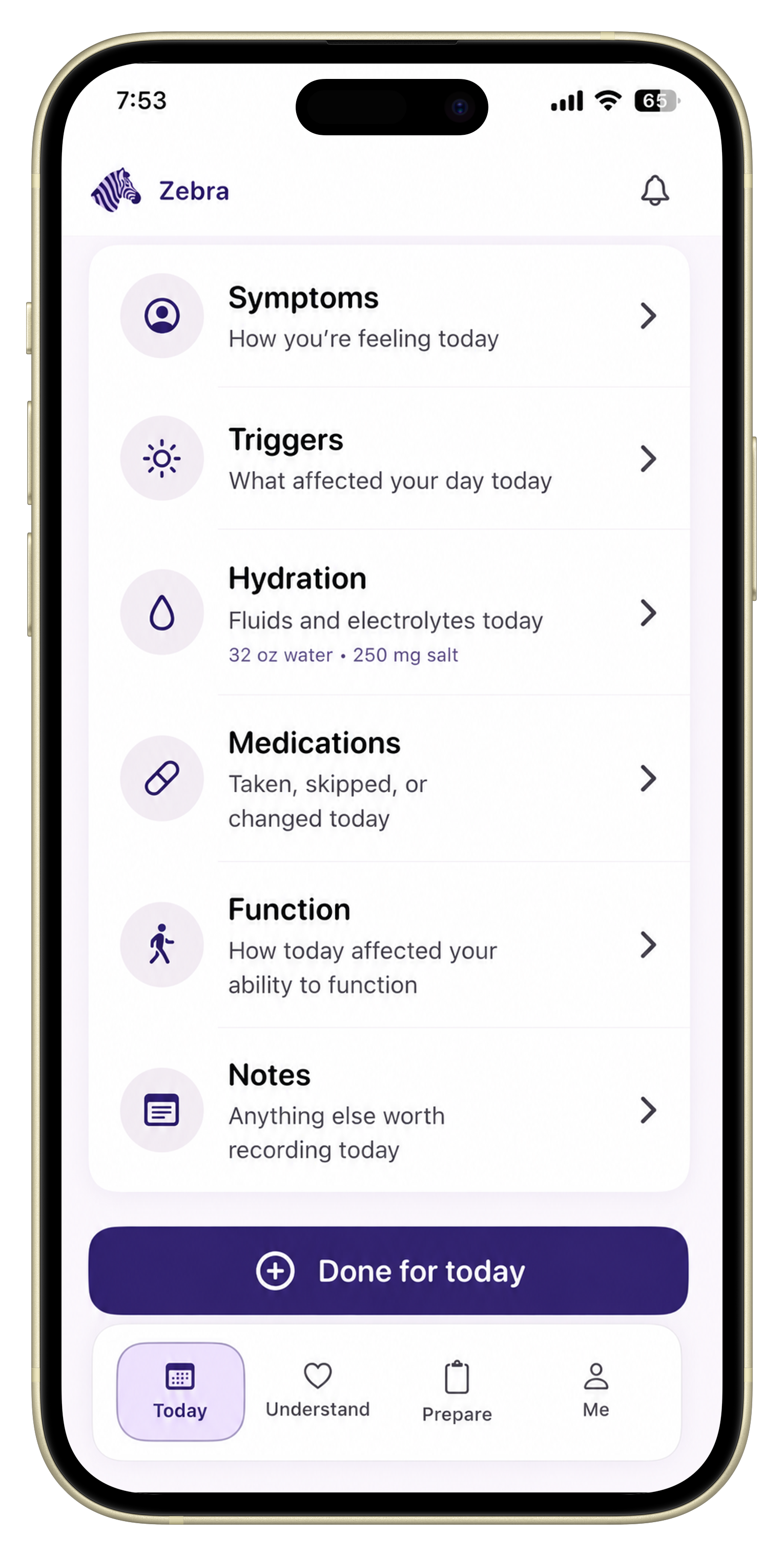
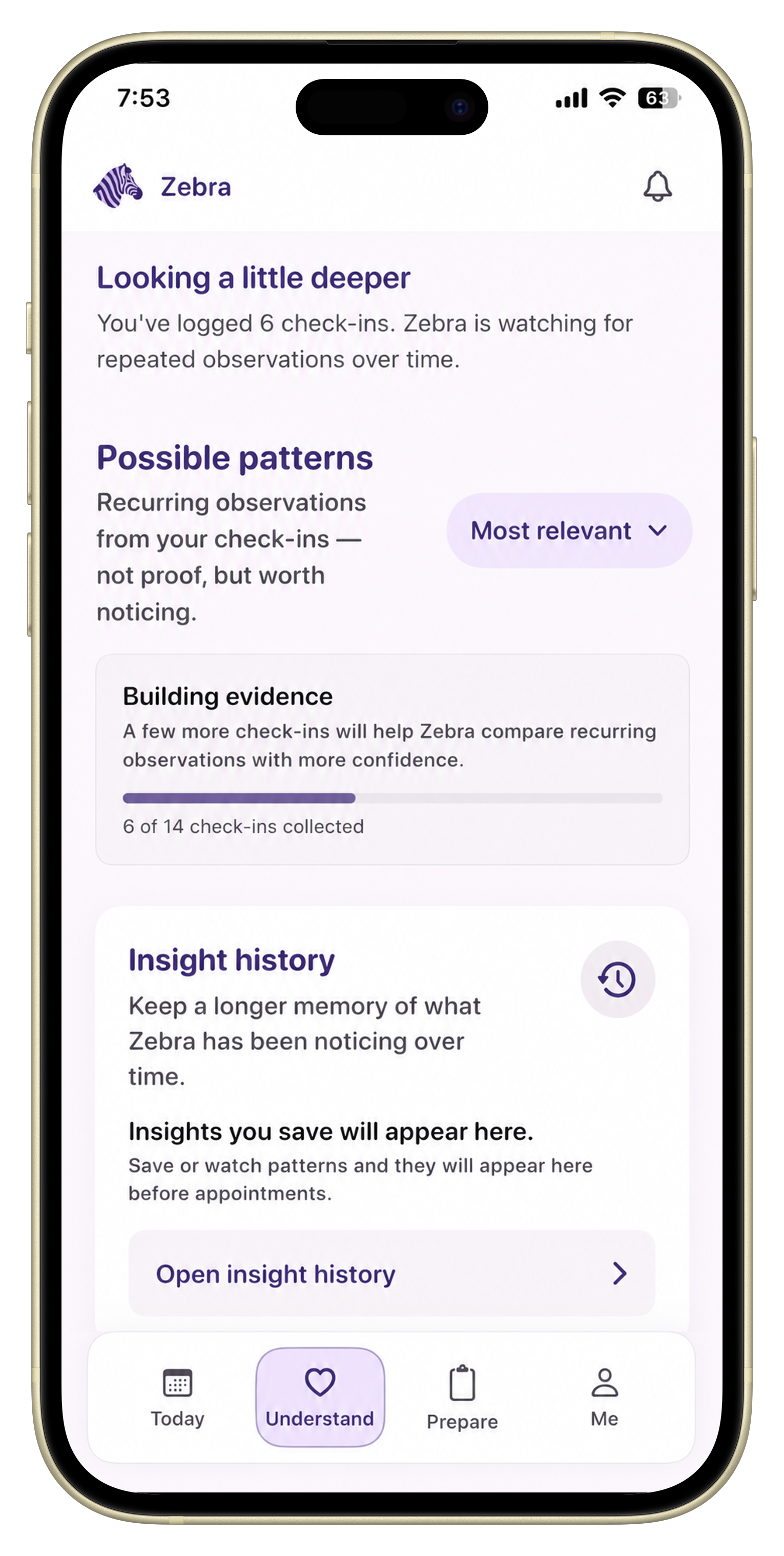
Zebra helps keep cycle context, symptoms, flares, triggers, medications, hydration, orthostatic notes, functional impact, and appointment questions in one timeline.
It does not diagnose PMS, PMDD, endometriosis, POTS, fibromyalgia, or any condition. It helps you bring a clearer pattern to the clinician who can evaluate it.
Track period start and end dates, flow, pain, fatigue, dizziness, palpitations, brain fog, sleep, GI symptoms, medications, activity, and what changed in daily function.
Several menstrual health resources suggest tracking symptoms across a few cycles when PMS or recurring cycle symptoms are a concern, but your clinician may recommend a different plan.
No. Cycle timing can be useful context, but symptoms can also change because of sleep, illness, stress, medication changes, hydration, activity, or another condition.
Seek medical care for heavy bleeding, severe or new pain, fainting, shortness of breath, chest pain, pregnancy concerns, symptoms that disrupt daily life, or severe mood symptoms such as feeling unsafe or suicidal.
No. Zebra helps organize patient-entered history for appointments. It does not diagnose, treat, or replace medical care.
Put this into practice
Use Zebra to keep cycle context, symptoms, flares, medications, and appointment questions in one timeline.
Download ZebraKnowledge hub
Keep exploring
A practical guide to tracking sick-day POTS flares, infection symptoms, fever, hydration, salt, medication timing, heart rate, dizziness, fatigue, recovery, and doctor-ready summaries.
A practical guide to tracking sleep, fatigue, pain, brain fog, naps, medication context, activity, and next-day functional impact.
A practical guide to tracking migraine and headache days, symptoms, medication response, possible triggers, sleep, hydration, menstrual cycle context, and appointment-ready summaries.
A practical tracking guide for people managing overlapping POTS, EDS or hEDS, and MCAS symptoms before appointments.