Menstrual Cycle Flare Tracker: What to Log When Symptoms Change
A practical guide to tracking cycle-related flares, POTS symptoms, fibromyalgia pain, fatigue, brain fog, GI symptoms, medications, and appointment questions.

Zebra
For invisible chronic illness
Symptom Tracking
A migraine or headache diary is most useful when frequency, duration, severity, symptoms, medication timing, possible triggers, menstrual cycle context, sleep, hydration, and functional impact stay together. The goal is not to prove one trigger. The goal is to bring a clearer headache pattern to your clinician.
Migraine and headache symptoms can be hard to explain after the attack has passed. You may remember the pain, nausea, light sensitivity, or brain fog, but the details that help a clinician are often more specific: how often it happens, how long it lasts, how severe it gets, what symptoms come with it, what medication you took, what helped, what did not help, and what the episode stopped you from doing.
A migraine or headache diary does not diagnose migraine, tension-type headache, cluster headache, medication overuse headache, POTS, EDS, MCAS, Long COVID, or any other condition. It helps you bring a clearer pattern to a clinician who can evaluate it.
The simplest useful headache diary starts with the event itself.
Track:
Example: “Started 9:30 a.m., right temple and behind eye, throbbing 7/10, nausea and light sensitivity, lay down from 10:00 to noon, missed work call.”
That is already more useful than “bad migraine.”
Headache disorders often involve more than head pain. Keep the connected symptoms visible.
Track whether you had:
If a symptom is new, severe, unusual, or concerning, seek medical advice promptly. A diary is not a substitute for urgent care.
Medication notes are one of the most appointment-useful parts of a headache diary.
Record:
Do not change medications based on a diary alone. Bring the pattern to your clinician, especially if you are using acute medications often or they are not working well.
Migraine triggers can be complicated. Sometimes a “trigger” is actually an early symptom of an attack. Sometimes several factors overlap: poor sleep, stress, skipped meals, weather change, period, dehydration, bright light, alcohol, or exertion.
Use cautious wording:
Patterns over weeks are more useful than one memorable attack.
You do not need a perfect lifestyle log, but a few context points can help.
Track:
This is especially helpful when headaches overlap with POTS, dysautonomia, EDS, fibromyalgia, Long COVID, or ME/CFS.
Pain severity matters, but function often tells the story clinicians need.
Write down whether the headache changed your ability to:
“Pain 5/10 but could not look at screens for 6 hours” is a different clinical story than “pain 5/10 and worked normally.”
Seek urgent medical help for sudden severe headache, new neurologic symptoms, fainting, confusion, fever with stiff neck, headache after head injury, headache with new vision loss, or any symptom your clinician has told you is urgent.
Also ask for medical advice when headaches are new, changing, more frequent, triggered by exertion or coughing, worse with posture, or associated with unexplained vomiting.
The diary can help later. Safety comes first.
Before a primary care, neurology, cardiology, allergy, or chronic illness appointment, summarize:
Helpful questions:
Helpful background:
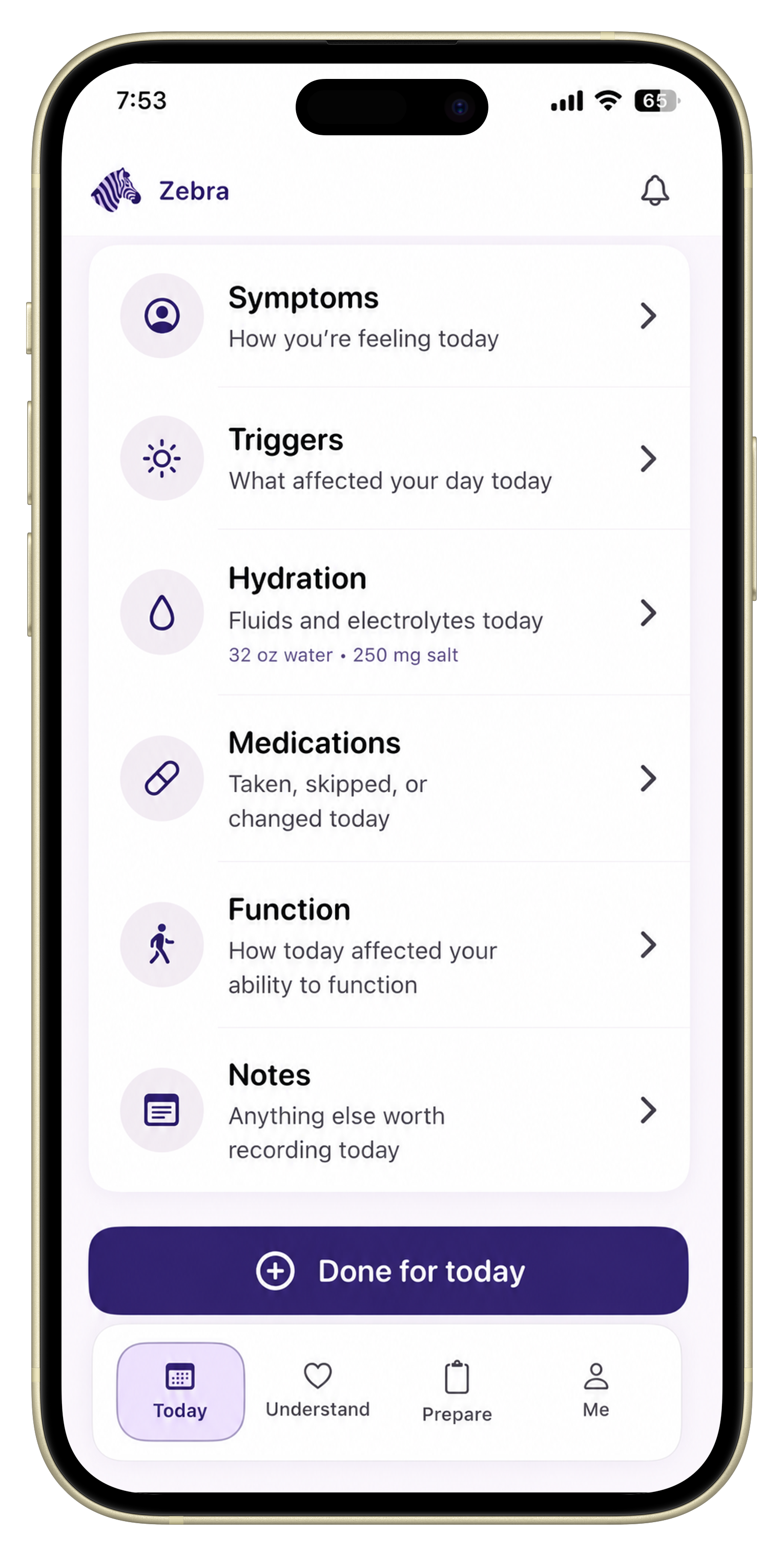
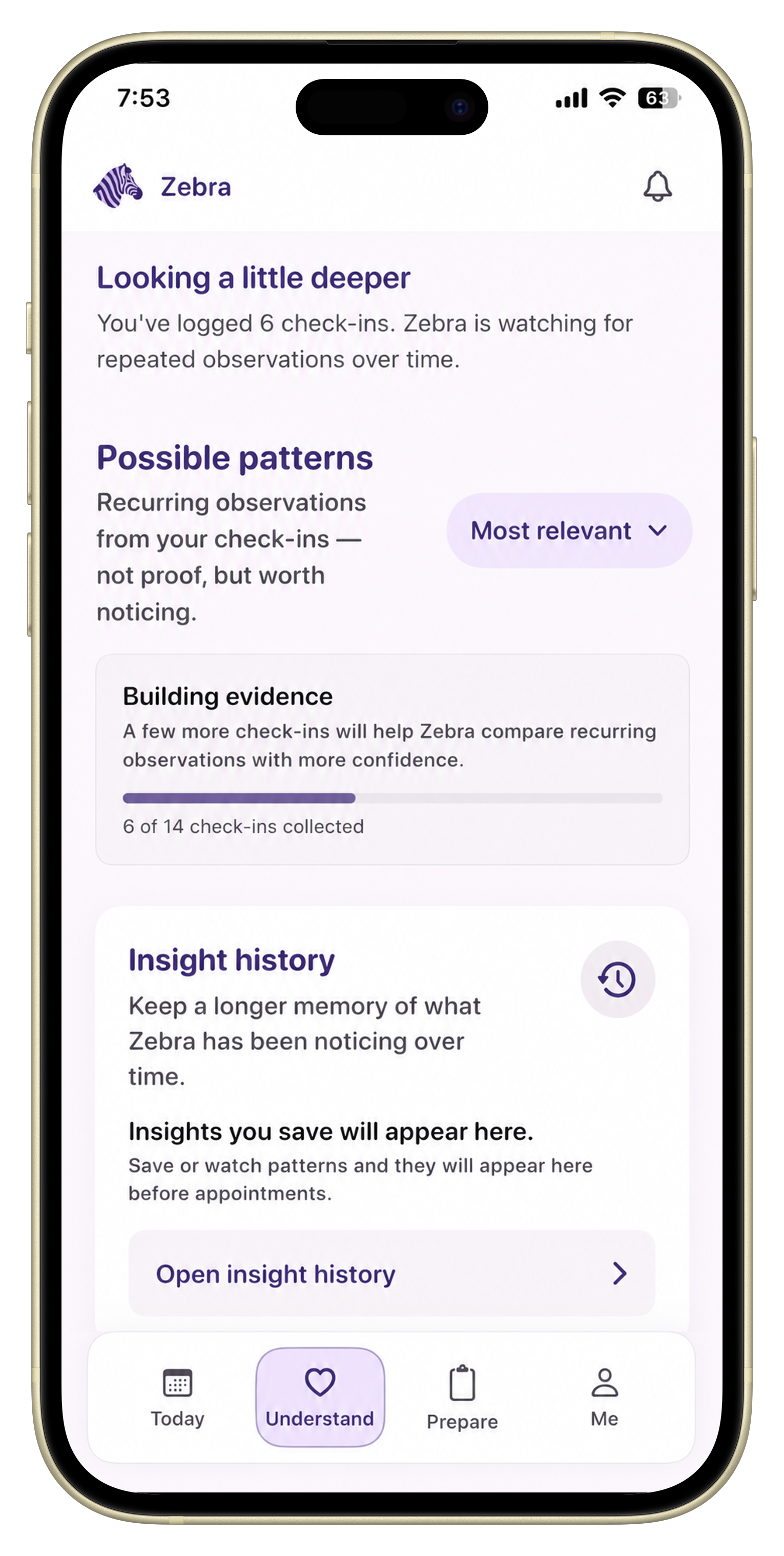
Zebra helps keep headache days, migraine symptoms, medication timing, possible triggers, sleep, hydration, cycle context, flares, functional impact, and appointment questions in one timeline.
It does not diagnose migraine or headache disorders. It helps you bring a clearer, doctor-ready pattern to the clinician who can evaluate it.
Put this into practice
Use Zebra to keep headache days, migraine symptoms, medications, triggers, sleep, hydration, cycle context, and appointment questions in one timeline.
Download ZebraKnowledge hub
Keep exploring
A practical guide to tracking cycle-related flares, POTS symptoms, fibromyalgia pain, fatigue, brain fog, GI symptoms, medications, and appointment questions.
A practical guide to tracking sick-day POTS flares, infection symptoms, fever, hydration, salt, medication timing, heart rate, dizziness, fatigue, recovery, and doctor-ready summaries.

A practical fibromyalgia flare tracker guide for logging pain, fatigue, sleep, brain fog, triggers, recovery, and what helped.
A practical guide to tracking flushing, hives, GI symptoms, dizziness, breathing symptoms, possible triggers, medication context, and recovery.