Quick definition
What this page means in Zebra
A central Zebra condition hub for upright symptoms, orthostatic changes, daily tracking, and specialist appointment prep.

Zebra
For invisible chronic illness
Condition hub
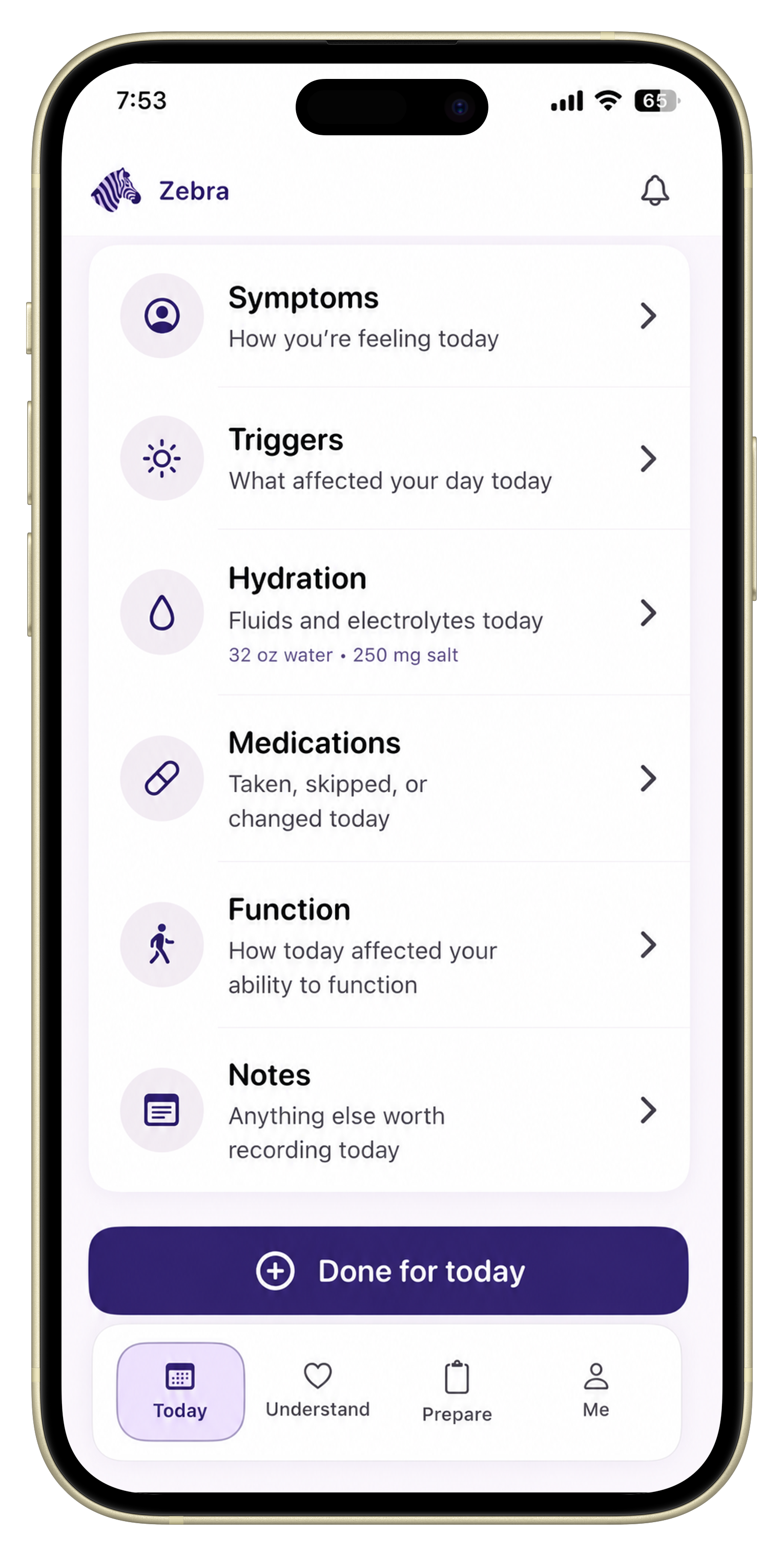
POTS is one of Zebra’s core condition hubs. On Zebra, it usually connects symptom tracking, orthostatic context, hydration and salt changes, daily function, and the need for a clearer appointment-ready record.
Quick definition
A central Zebra condition hub for upright symptoms, orthostatic changes, daily tracking, and specialist appointment prep.
Where it connects
Why it matters
This hub connects definitions, related guides, and nearby entities so the concept is useful for people, Google, and AI retrieval.
Condition map
These pages are generated from Zebra’s entity graph so the condition hub can keep related symptoms, workflows, testing context, and reports connected without manual link lists.
Symptoms
Orthostatic testing and vitals
Doctor visits and appointment prep
Medication tracking
Reports and summaries
Daily management context
Overlap conditions
Related entities
condition
condition
condition
condition
condition
condition
condition
symptom
Related guides
A practical guide to tracking sick-day POTS flares, infection symptoms, fever, hydration, salt, medication timing, heart rate, dizziness, fatigue, recovery, and doctor-ready summaries.
A practical guide to tracking POTS symptoms during flights, car rides, terminals, lines, missed meals, hydration changes, salt, compression, medication timing, fatigue, recovery, and travel planning.

A practical guide to recording home orthostatic heart rate, blood pressure, symptoms, and context for POTS or orthostatic intolerance conversations.
A practical guide to organizing symptom, upright-context, recovery, medication, hydration, flare, and appointment notes after a positive tilt table test.
A practical guide to tracking blood pooling, leg or foot discoloration, swelling, heaviness, pain, standing time, posture, compression, hydration, salt, recovery, and appointment summaries.
A practical guide to tracking exercise intolerance, activity type, position, duration, intensity, heart rate, dizziness, fatigue, delayed worsening, recovery, and appointment summaries.