Quick definition
What this page means in Zebra
Episodes in which mast cells release chemicals that cause symptoms such as flushing, hives, itching, headaches or stomach problems.

Zebra
For invisible chronic illness
Condition hub
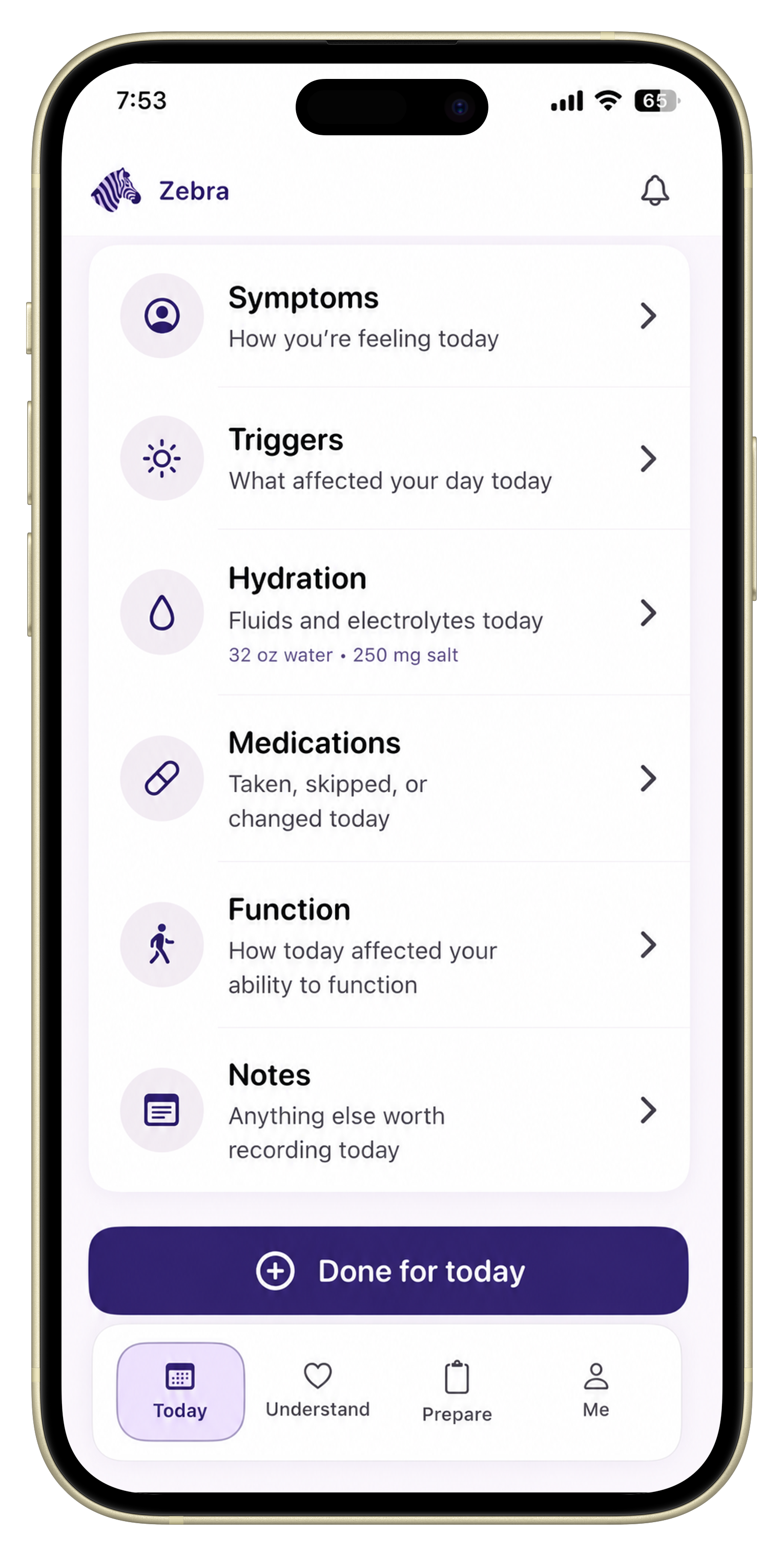
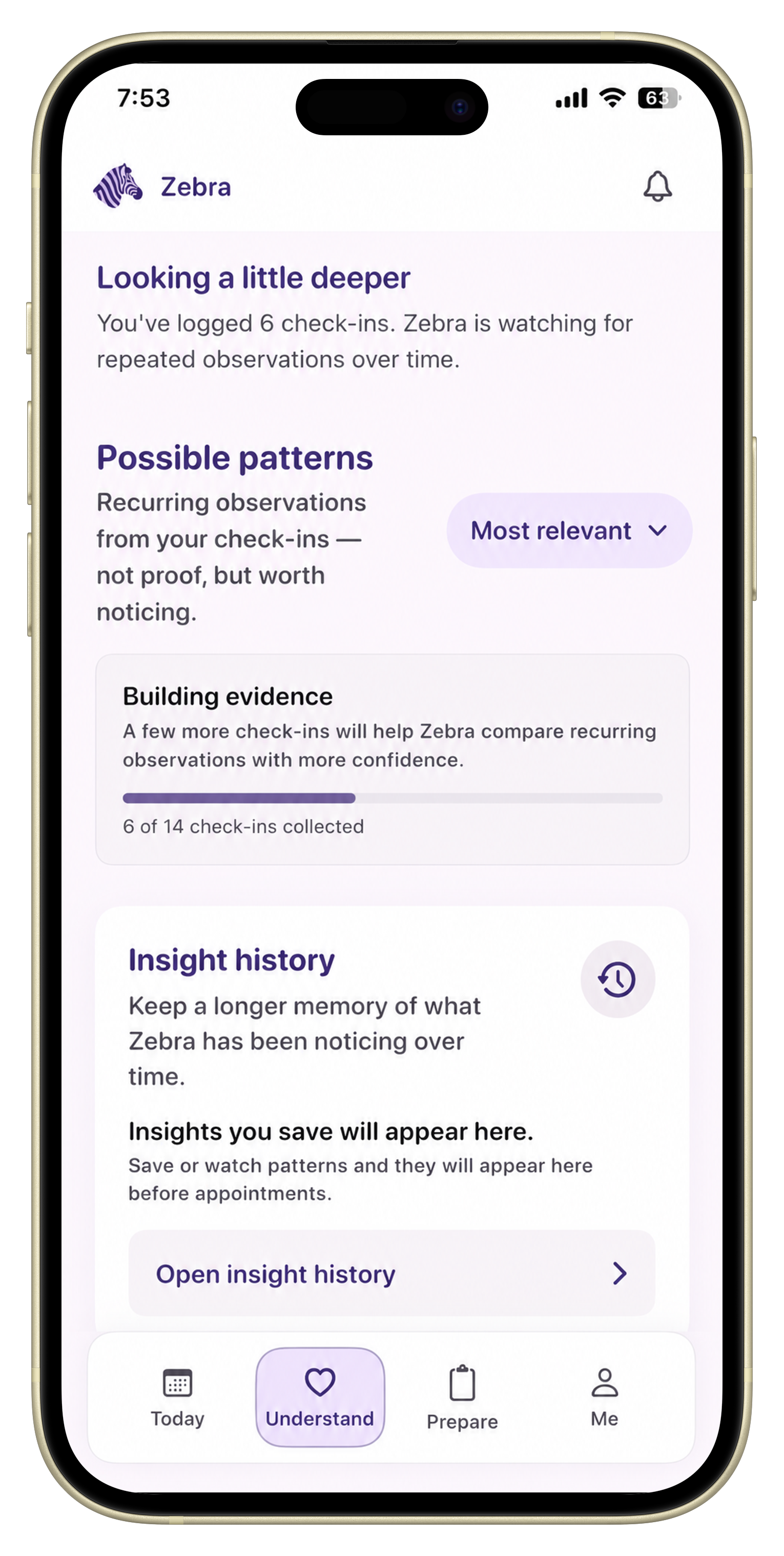
Mast cell activation syndrome (MCAS) describes repeated episodes in which mast cells release chemicals, called mediators, that cause symptoms such as flushing, itching, hives, headaches, digestive problems and sometimes low blood pressure, according to The Mast Cell Disease Society. For a diagnosis, symptoms have to involve two or more organ systems at the same time, keep happening, and not be explained by another condition. A clinician makes the diagnosis. Zebra helps you record each episode with its timing and possible triggers.
Quick definition
Episodes in which mast cells release chemicals that cause symptoms such as flushing, hives, itching, headaches or stomach problems.
Where it connects
Why it matters
This hub connects definitions, related guides, and nearby entities so the concept is useful for people, Google, and AI retrieval.
Condition map
These pages are generated from Zebra’s entity graph so the condition hub can keep related symptoms, workflows, testing context, and reports connected without manual link lists.
Symptoms
Orthostatic testing and vitals
Doctor visits and appointment prep
Medication tracking
Reports and summaries
Daily management context
Overlap conditions
Related entities
condition
condition
condition
condition
condition
condition
condition
symptom
Related guides
A practical guide to tracking post-meal symptoms, nausea, bloating, reflux, bowel changes, heart rate, dizziness, hydration, salt, medication timing, and functional impact.
A practical guide to tracking flushing, hives, GI symptoms, dizziness, breathing symptoms, possible triggers, medication context, and recovery.
A practical tracking guide for people managing overlapping POTS, EDS or hEDS, and MCAS symptoms before appointments.
A practical guide to tracking sick-day POTS flares, infection symptoms, fever, hydration, salt, medication timing, heart rate, dizziness, fatigue, recovery, and doctor-ready summaries.
A practical guide to tracking POTS symptoms during flights, car rides, terminals, lines, missed meals, hydration changes, salt, compression, medication timing, fatigue, recovery, and travel planning.
A practical guide to tracking blood pooling, leg or foot discoloration, swelling, heaviness, pain, standing time, posture, compression, hydration, salt, recovery, and appointment summaries.