Quick definition
What this page means in Zebra
A rise in heart rate when moving from lying down to standing.

Zebra
For invisible chronic illness
Entity
Orthostatic tachycardia is a rise in heart rate on standing. A sustained, large rise with symptoms is part of the POTS criteria: the Heart Rhythm Society consensus uses at least 30 beats per minute in adults and 40 for ages 12 to 19. A rise on its own is not a diagnosis. Zebra helps you record heart rate by position with symptoms and context.
Quick definition
A rise in heart rate when moving from lying down to standing.
Where it connects
Why it matters
This hub connects definitions, related guides, and nearby entities so the concept is useful for people, Google, and AI retrieval.
Related entities
condition
condition
condition
condition
condition
condition
condition
condition
Related guides

A practical guide to recording home orthostatic heart rate, blood pressure, symptoms, and context for POTS or orthostatic intolerance conversations.
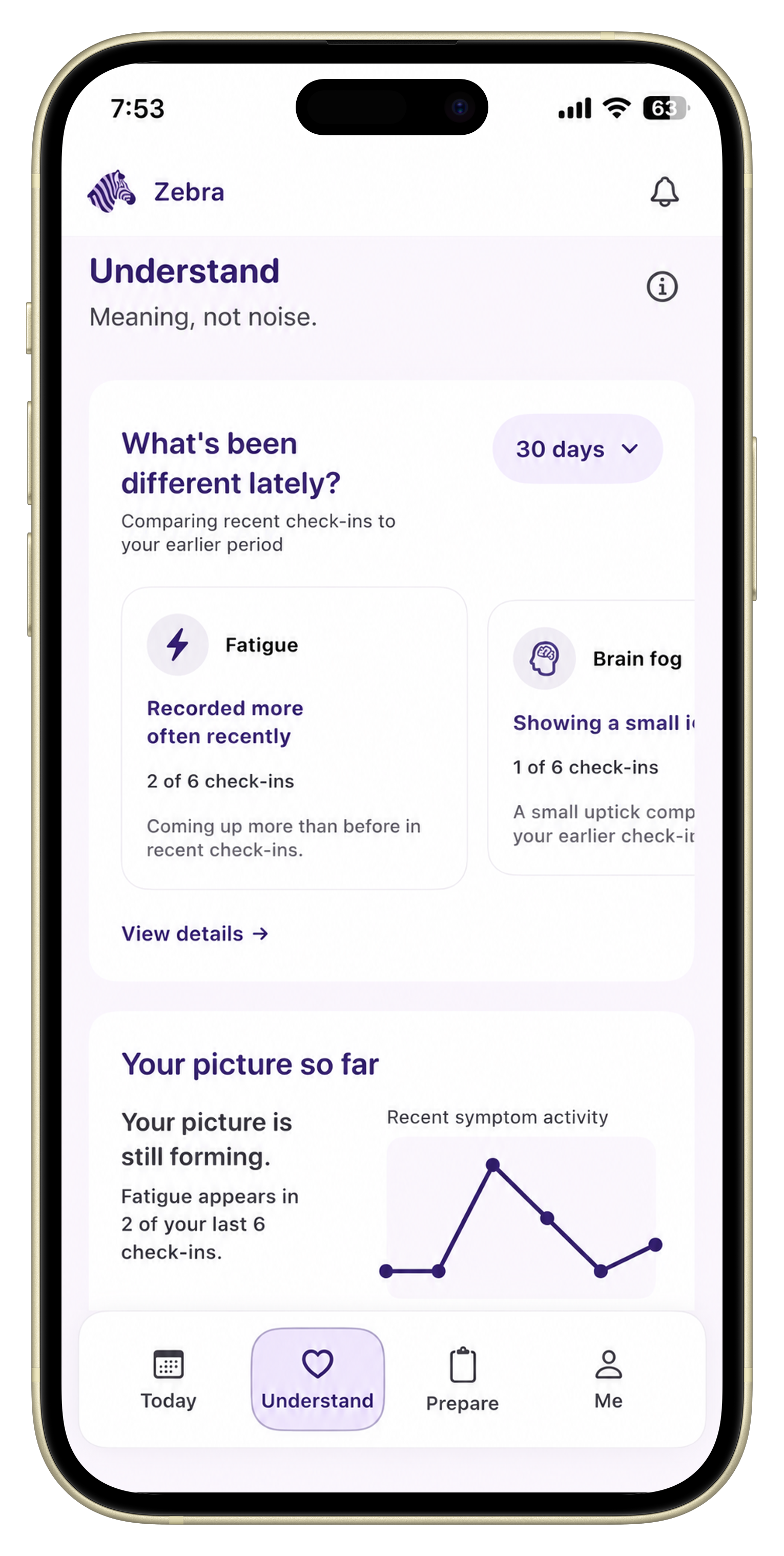
A practical comparison of POTS and orthostatic tachycardia, plus what to track when you need a clearer doctor-ready history.
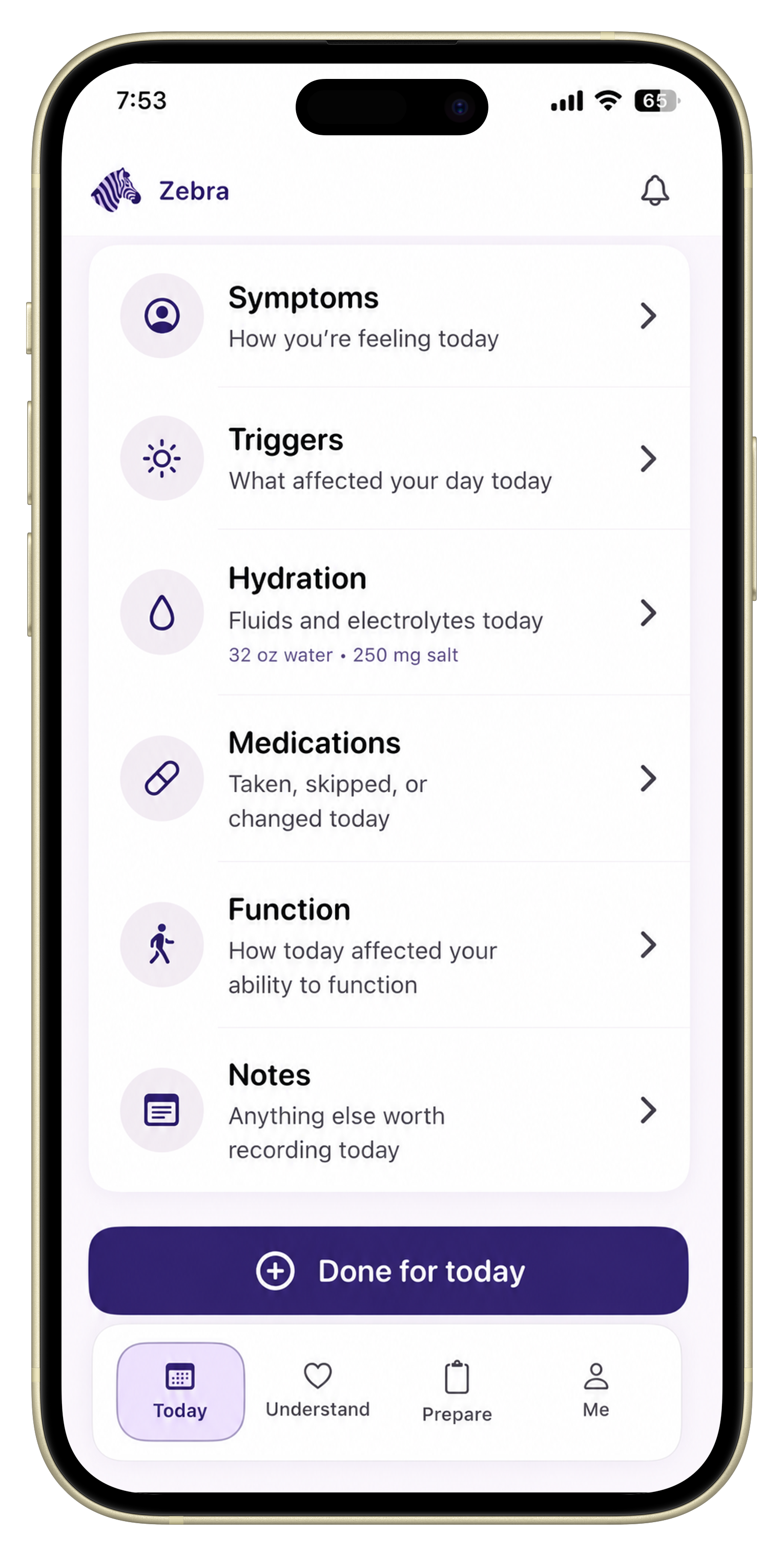
A practical guide to tracking sick-day POTS flares, infection symptoms, fever, hydration, salt, medication timing, heart rate, dizziness, fatigue, recovery, and doctor-ready summaries.
A practical guide to tracking POTS symptoms during flights, car rides, terminals, lines, missed meals, hydration changes, salt, compression, medication timing, fatigue, recovery, and travel planning.
A practical guide to organizing symptom, upright-context, recovery, medication, hydration, flare, and appointment notes after a positive tilt table test.
Learn how to track triggers without overcomplicating your day: what context is actually worth noting, how to spot an association without overclaiming, and what to skip.