Fibromyalgia Flare Tracker: What to Log During a Bad Flare Day
A practical fibromyalgia flare tracker guide for logging pain, fatigue, sleep, brain fog, triggers, recovery, and what helped.

Zebra
For invisible chronic illness
Fibromyalgia
Pain is real, but it is hard to explain in a short, stressful appointment. Describe where it is, what it feels like, how strong it is, when it happens, and what it stops you doing.
Fibromyalgia pain is often hard to explain in a short appointment. Between brain fog, nerves and a clock on the wall, the details you planned to mention can disappear. A clear, short description helps your clinician understand what you live with.
Describe five things: where the pain is, what it feels like in your own words, how strong it is on a 0 to 10 scale, when and after what it happens, and what it stops you doing. Write each one as a sentence you can read aloud.
Pain can be real and still hard to put into words. People often remember that a day was bad, but not the location, the quality or how it changed over the week. Stress, fatigue and brain fog make recall harder, especially in front of someone else. Writing the details down before the visit gives you something to read from instead of reconstructing them from memory.
1. Where is it? Name the areas, and say whether it is in one place or spreads. “Neck and upper back, and both hips on bad days” is more useful than “everywhere”.
2. What does it feel like? Use the words that fit. Common descriptions include aching, burning, stabbing, throbbing, tight, heavy, electric, shooting, or dull. If none fit, describe it in your own words.
3. How strong is it? Use a 0 to 10 scale, and decide what your own 0, 5 and 10 mean. Use the same scale every time so your clinician can compare days. A note such as “pain 6 out of 10 after sitting for an hour” is clearer than “pain was bad”.
4. When does it happen? Note the time of day, how long it lasts, and what came before it. Standing, sitting, cold, poor sleep, a busy day, or a long walk can all be part of the pattern. Write down what you noticed, not what you think caused it.
5. What does it stop you doing? This is often the most useful part. Examples include showering without a rest, finishing a shift, cooking a meal, sleeping through the night, or getting to an appointment on time. The functional impact guide explains how to capture this over time.
| What it feels like | Example sentence |
|---|---|
| Aching | ”A deep ache in my lower back that builds through the afternoon.” |
| Burning | ”A burning feeling along my left arm when I type.” |
| Stabbing or shooting | ”Short stabs in my hip when I stand up quickly.” |
| Heavy or tight | ”My shoulders feel heavy and tight after I carry shopping.” |
| Throbbing | ”A throbbing pain behind my eyes after screens.” |
Choose the words that match your experience. You do not need the most dramatic word.
Practise this out loud before the visit:
“My main pain is in [location]. It feels like [words]. On a typical day it is [number] out of 10, and on a bad day it reaches [number]. It is usually worse after [activity or time] and eases when [what helps]. Over the last two weeks it has stopped me from [one or two examples].”
Add one example from the last week. Specific examples are easier to follow than general summaries.
Bring one page, not a diary. Include:
If you track your pain between visits, a short, consistent entry is enough. Missed days do not erase your history.
A pain description does not prove a diagnosis, measure pain objectively, or tell anyone what treatment to use. Fibromyalgia is assessed by a clinician, who considers your history, examination and other causes. Seek urgent care for sudden severe pain, new weakness or numbness, chest pain, trouble breathing, or any symptom that feels like an emergency.
Helpful background from public health sources:
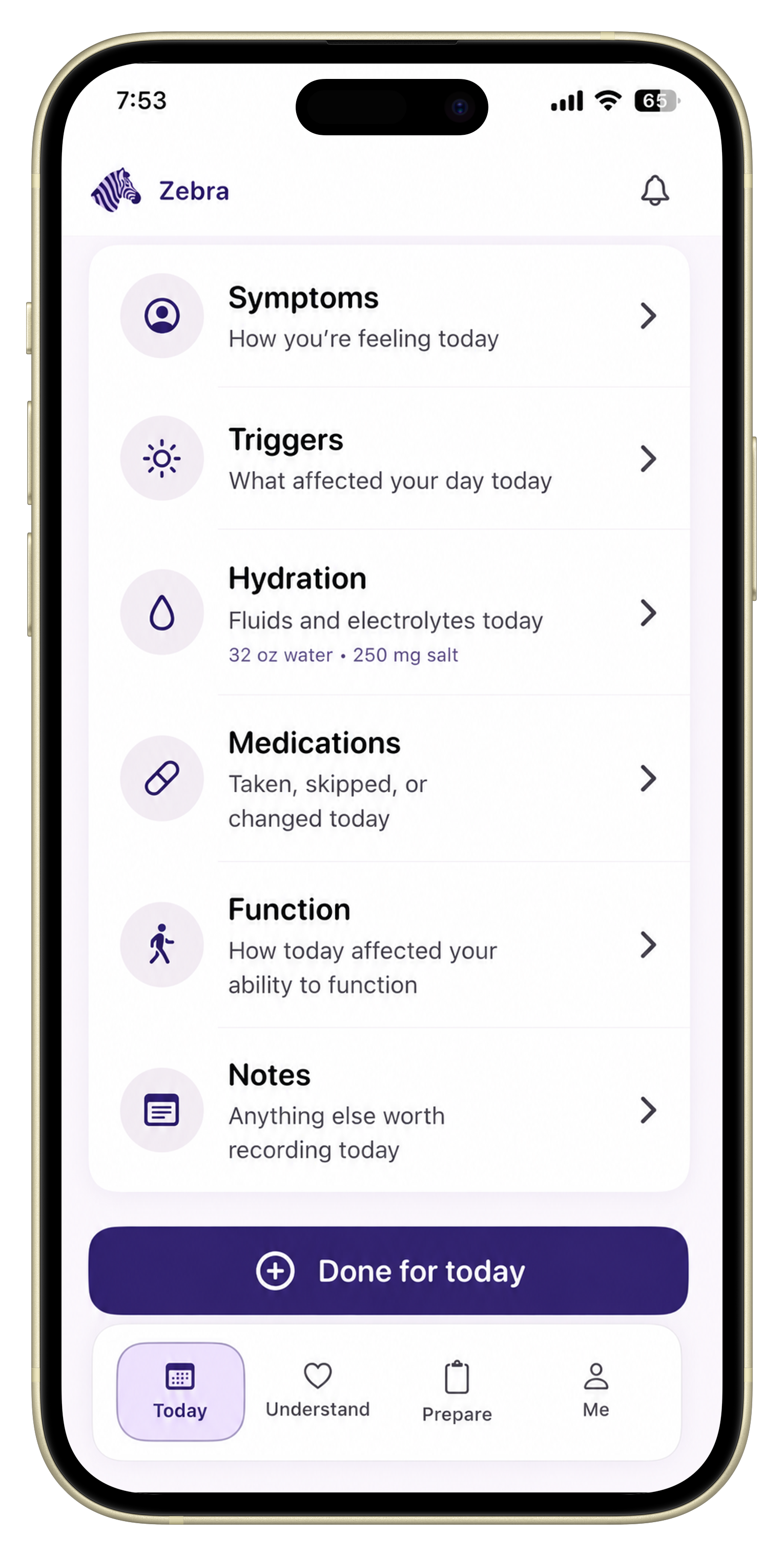
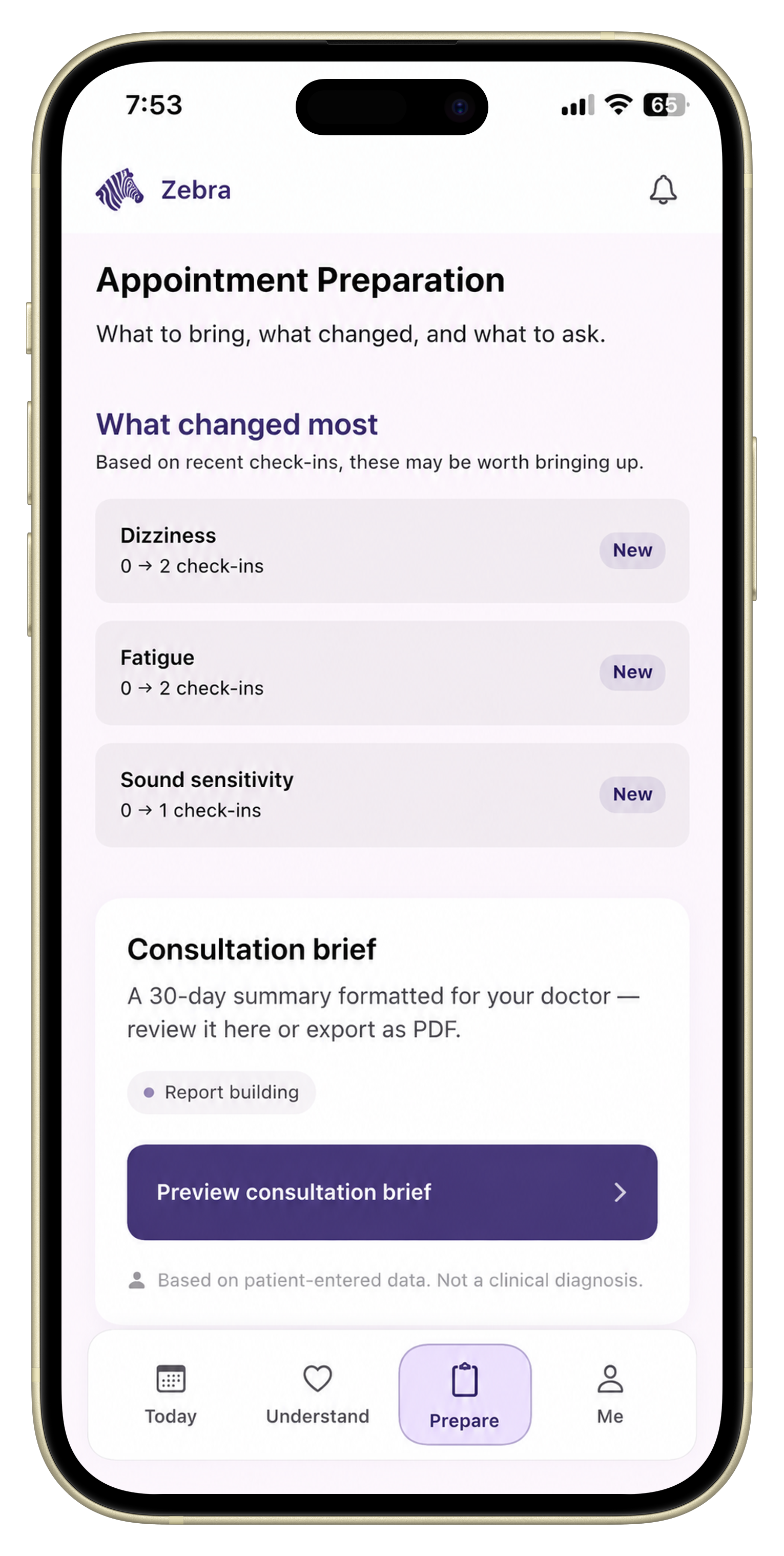
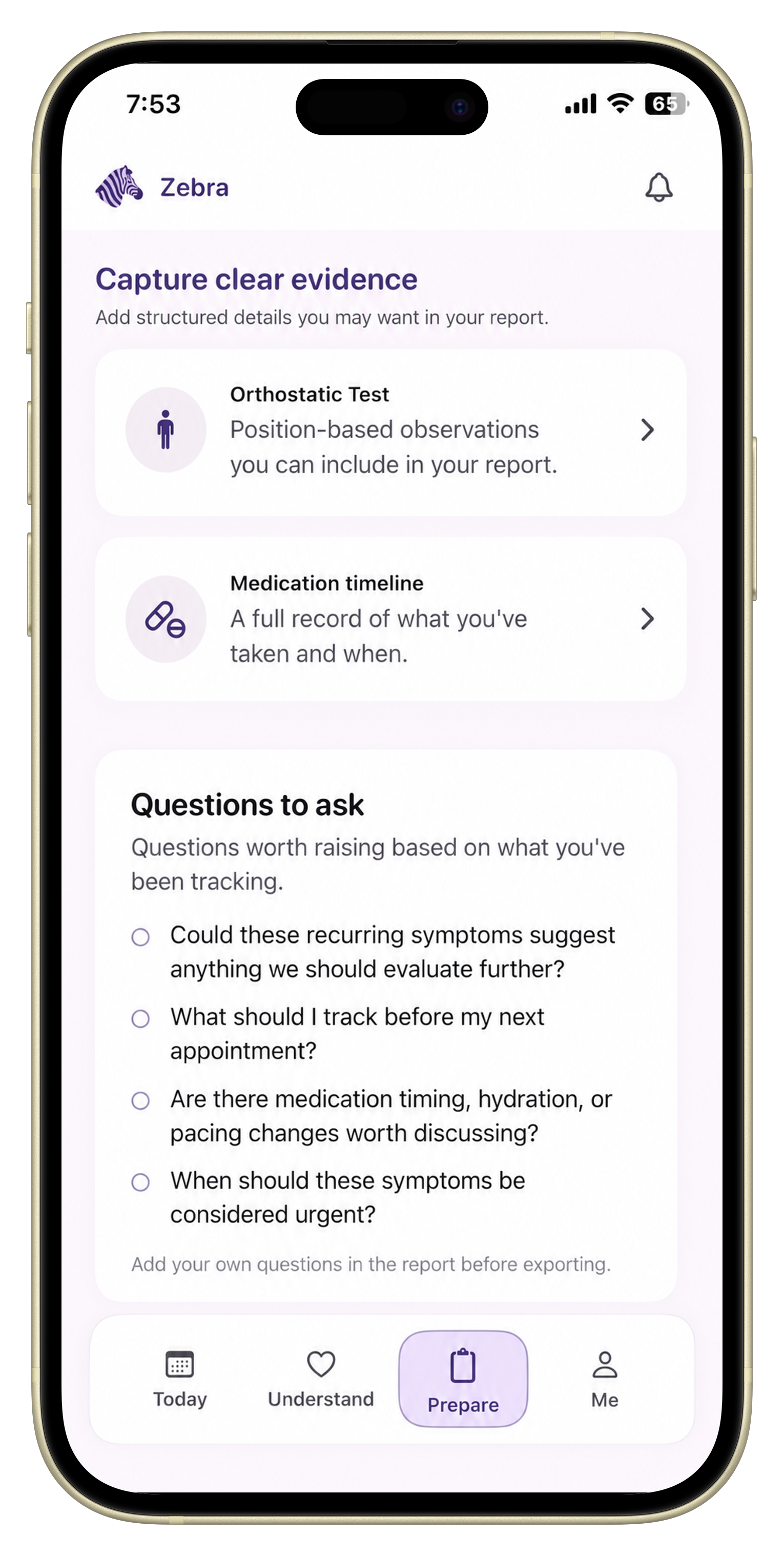
Zebra lets you record pain location, intensity and daily impact in one short entry, so you have the words ready when you need them. Before an appointment, the appointment prep checklist can help you turn the notes into a short visit plan. The doctor report gives your clinician a dated summary.
Zebra does not interpret your pain or diagnose fibromyalgia. It helps you bring a clearer account to the person who can.
Say where the pain is, what it feels like in your own words, how strong it is on a 0 to 10 scale, when it happens, what makes it better or worse, and what it stops you doing.
No. A clear description helps your clinician understand your experience. Diagnosis and treatment decisions are made by your clinician after an assessment.
Describe it the way it feels to you, such as heavy, tight, or burning, and say how it compares with your usual day. Plain words are useful.
No. Zebra helps organize patient-entered history for appointments. It does not diagnose fibromyalgia, measure pain objectively, or replace medical care.
Put this into practice
Use Zebra to record pain location, intensity and daily impact in one short entry, and bring a one-page summary to your appointment.
Download ZebraKnowledge hub
General information, not medical advice.
Keep exploring
A practical fibromyalgia flare tracker guide for logging pain, fatigue, sleep, brain fog, triggers, recovery, and what helped.
Learn how to build a doctor-ready timeline of flares, including what to track for each one, how far back to go, and how to keep it from becoming a second job.
A practical guide to tracking cycle-related flares, POTS symptoms, fibromyalgia pain, fatigue, brain fog, GI symptoms, medications, and appointment questions.
A practical guide to tracking migraine and headache days, symptoms, medication response, possible triggers, sleep, hydration, menstrual cycle context, and appointment-ready summaries.