Symptom Tracking for Chronic Illness: How to Build Doctor-Ready Proof
Learn how to turn symptom tracking into doctor-ready proof with a simple framework for symptoms, flares, function, and appointment prep.

Zebra
For invisible chronic illness
Reference / Glossary
A useful symptom journal keeps the few details your doctor needs together: what changed, when it happened, how severe it felt, what affected your day, and what you want to ask next.
A symptom journal for a doctor appointment is a short, organized record of symptoms, changes, timing, context, and daily impact. It can live in a notes app or a dedicated tracker. The useful part is the structure: it helps you explain what changed without rebuilding the whole history from memory in the room.
Start with the appointment-prep checklist and use the doctor report when you need to turn a longer history into a concise summary.
Useful entries often include:
Not every entry needs every field. Keep the smallest note that will help you compare days or explain a change.
Before the appointment, pull out:
The goal is a useful summary, not a data dump.
A symptom journal can help you:
The doctor-ready symptom report article explains how to organize that summary without turning it into a diagnosis.
It is especially useful when memory is unreliable or symptoms fluctuate.
Common problems include:
That is why structure matters.
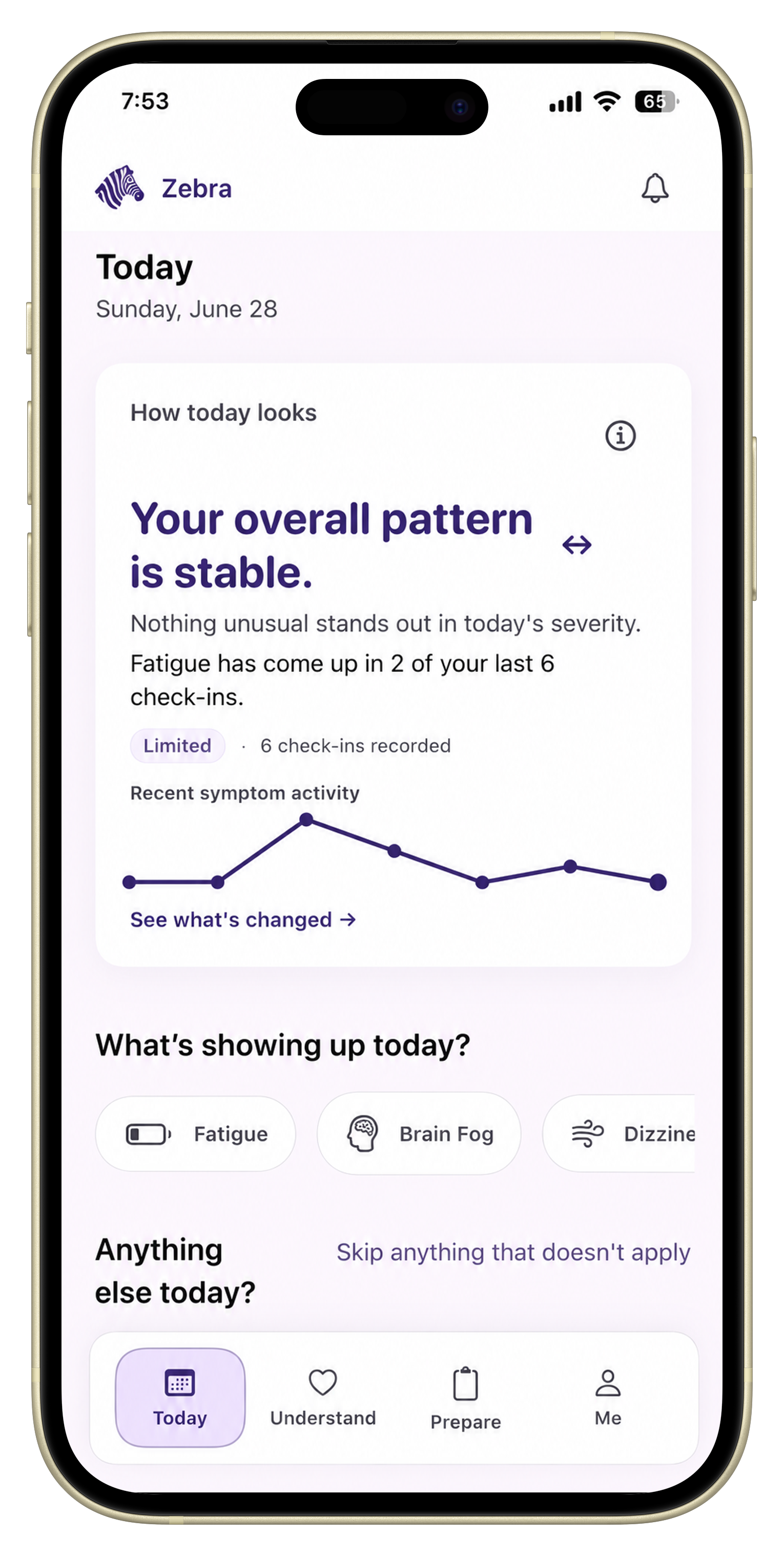
Zebra keeps symptoms, flares, medications, function changes, and appointment questions together. Its doctor report helps turn that history into a cleaner appointment summary. Zebra does not diagnose, interpret causes, or replace a clinician.
Keep the main symptoms, when they started or changed, severity, relevant context, medication changes, flare patterns, functional impact, and questions you want answered.
Not exactly. It can include notes, but its main purpose is creating a usable symptom history.
Not always. But a dedicated app can help when you want more structure and easier review later.
Put this into practice
Use Zebra when you want a structured symptom journal that is easier to review later.
Download ZebraKnowledge hub
Keep exploring
Learn how to turn symptom tracking into doctor-ready proof with a simple framework for symptoms, flares, function, and appointment prep.
Learn what a doctor-ready symptom report should include: symptoms, changes, function, medication context, and questions for the appointment.
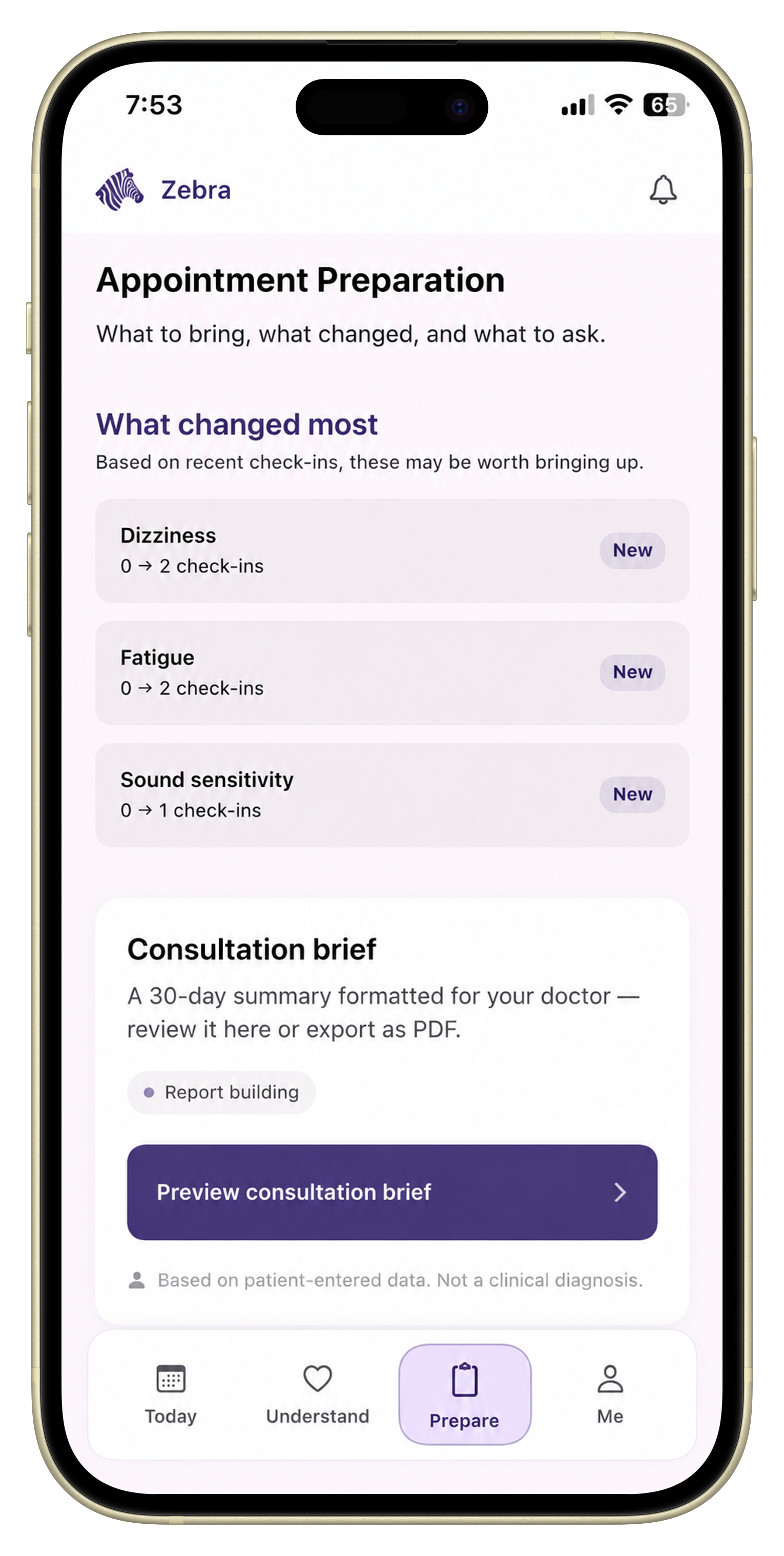
A practical symptom checklist for preparing clearer notes before a doctor, specialist, or cardiology appointment.
A simple framework for turning a month of symptom tracking into a clearer appointment-ready summary.