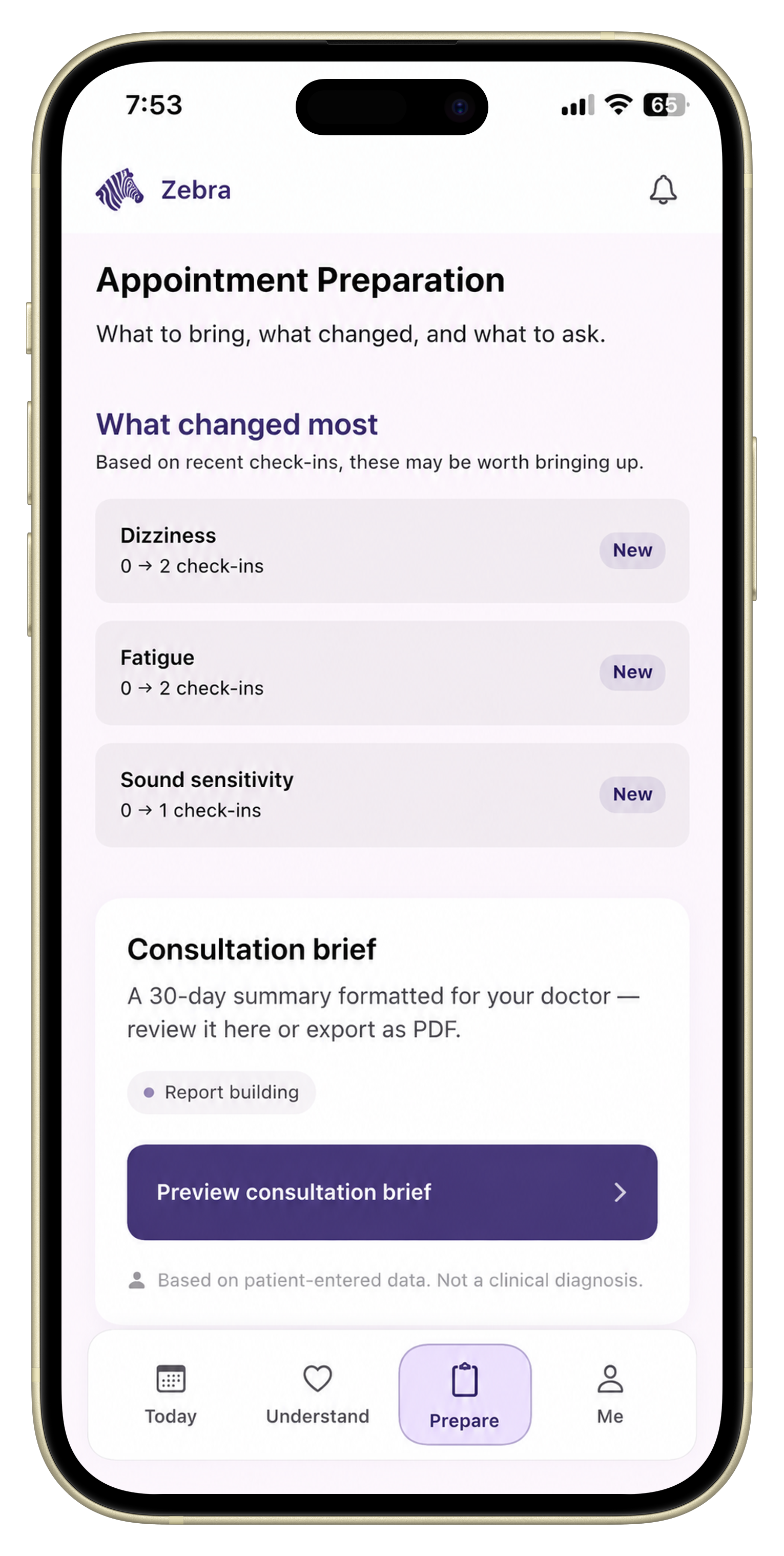
How to Prepare a Monthly Symptom Summary
A simple framework for turning a month of symptom tracking into a clearer appointment-ready summary.

Zebra
For invisible chronic illness
Doctor Reports
When you are managing several medications and supplements at once, the question that actually matters is simple: is this helping, is this causing something new, or is it too soon to tell. A short, consistent tracked history of doses, changes, and what followed is usually enough to answer that, without turning medication tracking into a spreadsheet project.
When you are managing several medications and supplements at once, the question that actually matters is simple: is this helping, is this causing something new, or is it too soon to tell. A short, consistent tracked history of doses, changes, and what followed is usually enough to answer that, without turning medication tracking into a spreadsheet project.
For people managing POTS, dysautonomia, EDS, fibromyalgia, or overlapping conditions, medication regimens are often complex and change more than once a year. Without a tracked history, it becomes hard to remember which change lined up with which new symptom, or whether something that felt like a side effect three months ago was ever mentioned to a clinician at all.
Symptoms tell you what your body is doing. Medication tracking tells you what changed around it. The value comes from keeping both close together, with dates, so a pattern like “this started two days after the dose increase” is something you can actually see later instead of vaguely remembering.
This matters for three common situations:
Keep the tracking proportional. A stable, unchanged medication does not need daily attention. A change does. If the change happens during a flare, see how to track medication changes during a flare.
Name, dose, and frequency, for prescriptions, over-the-counter medicine, and supplements alike.
Start date for a new medication, and the date of any dose change, whether that is an increase, a decrease, or stopping altogether.
Note anything new in the days after a change, whether it looks like a side effect or simply feels different. Include the timing, since some effects appear within hours and others take days.
For medications you take only when needed, note the date, the reason, and roughly what happened afterward. A single use tells you little. A pattern over several uses tells you whether it reliably helps.
“Symptoms seem somewhat improved since the increase” is a useful, honest observation. “This medication fixed it” or “this medication is definitely causing X” overstates what personal tracking can actually confirm, especially when other things are also changing at the same time.
This is often the hardest distinction, and there is no perfect rule. A few things help:
The FDA’s guide to side effects names the moments when side effects can start: when you begin a new drug or dietary supplement, stop a drug you have taken for a while, or raise or lower a dose. Those are the dates worth writing down.
None of this needs to be resolved by you alone. The goal of tracking is to bring a clear, dated account to a clinician, not to diagnose the cause yourself. The FDA also advises asking your health care professional about possible side effects when a drug is prescribed.
If you are short on energy, this is enough:
This is enough structure to answer “what changed and what happened after” without asking you to track a stable regimen every single day.
Supplements, over-the-counter medicine, and PRN use all affect the picture. Leaving them out can hide part of the pattern.
Without a date, it becomes much harder to line up a new symptom with a medication change later. Even an approximate date is better than none.
One good day after starting a medication does not confirm it is working, and one bad day does not confirm a side effect. Look for a pattern across more than one instance before treating it as likely.
Details from months ago are hard to recall accurately. A dated note made close to the change is far more reliable than a memory reconstructed later.
On harder days, this can shrink to:
That is still enough to preserve the timing, which is the part that is hardest to reconstruct from memory later.
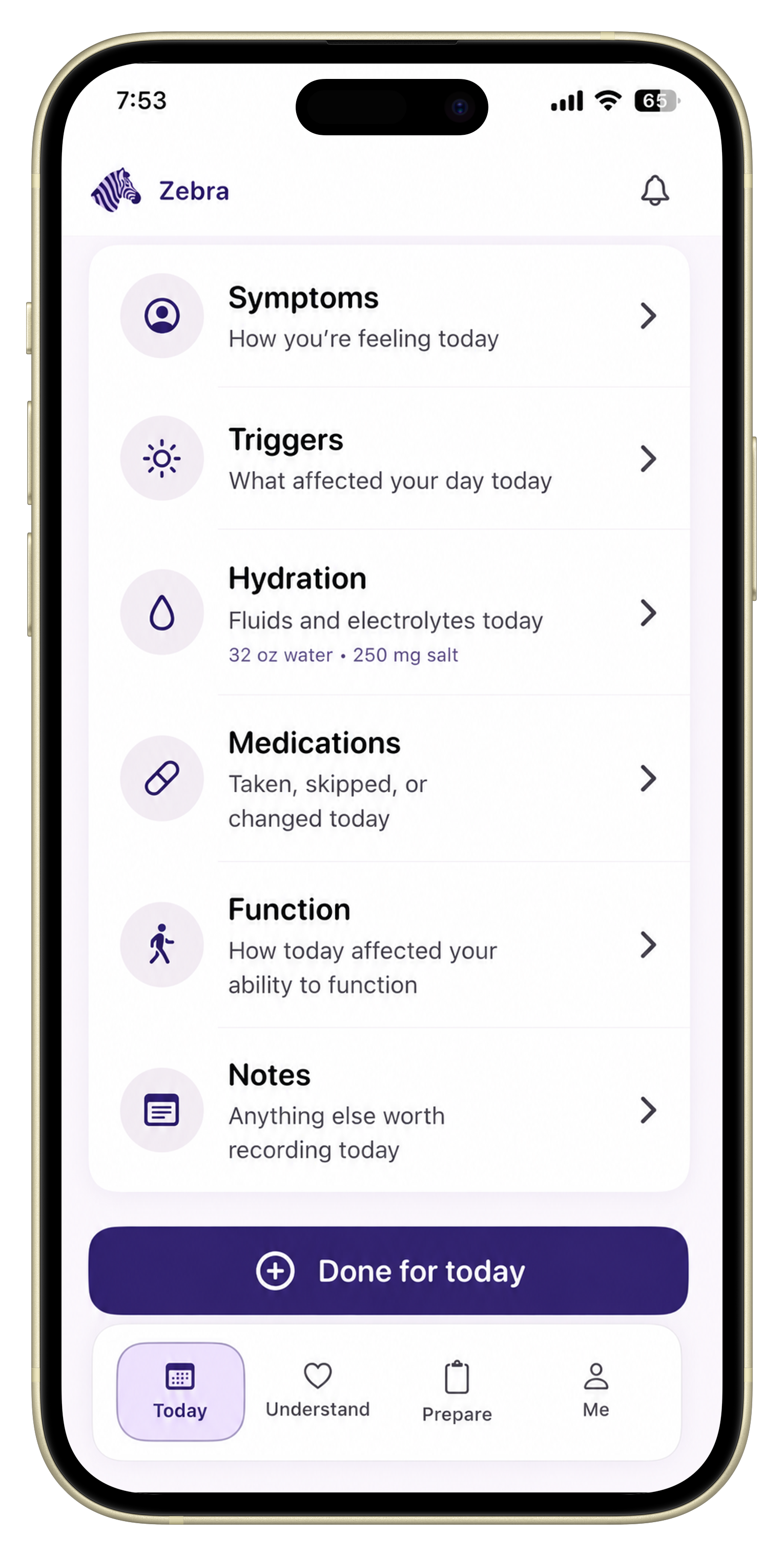
Zebra keeps medications, dose changes, and PRN use connected to your day-to-day symptom history, so the timing between a change and anything that followed is preserved automatically.
Instead of trying to remember when a dose changed or whether a symptom started before or after it, Zebra can help you keep:
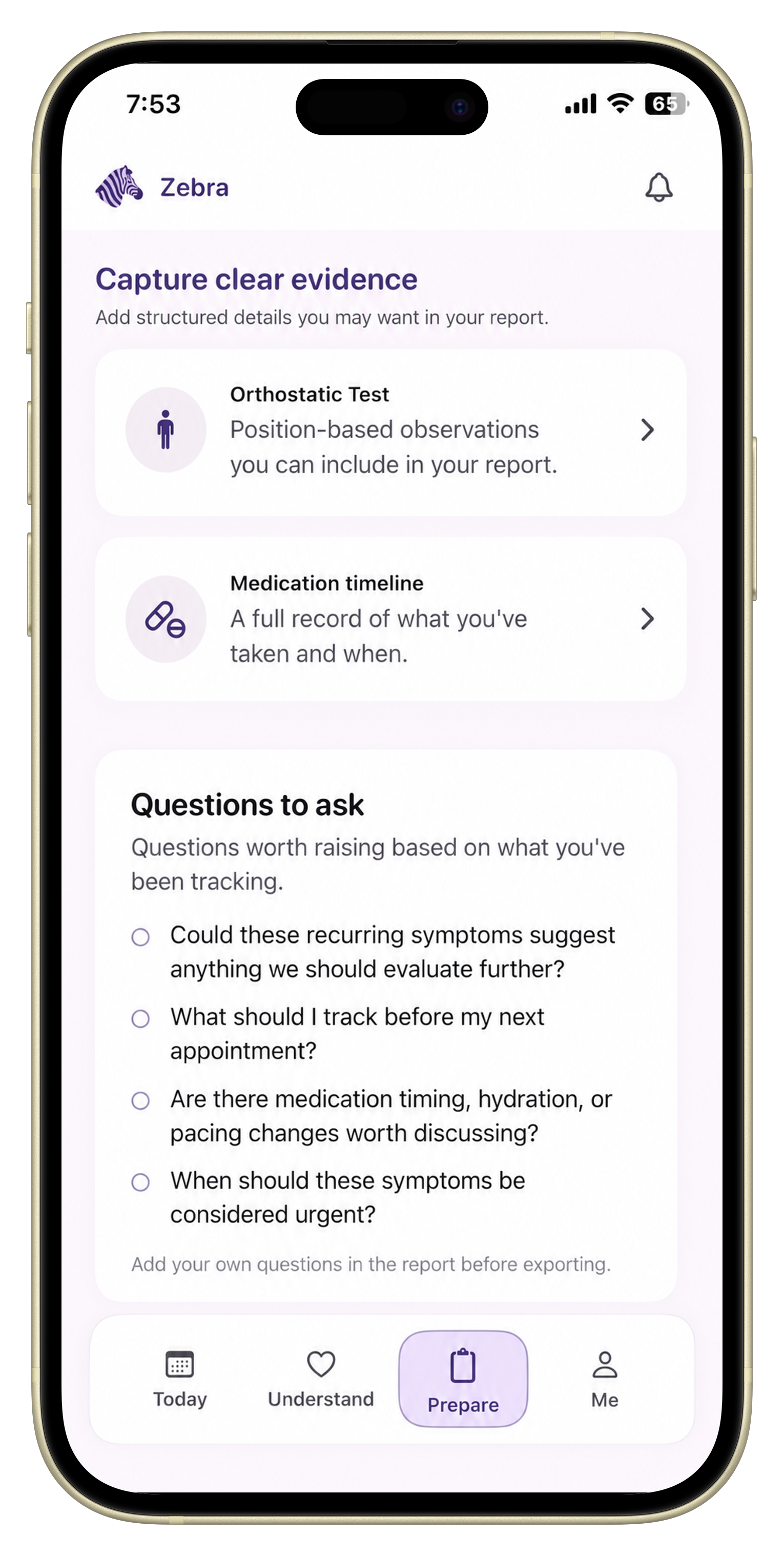
so that Zebra’s doctor report can show a clinician the same timeline you have been living, instead of a summary reconstructed from memory in the appointment.
Zebra does not identify side effects or confirm whether a medication is working. It helps you keep an accurate, dated timeline so you and a clinician can look at the same history together.
A symptom is part of your underlying condition. A side effect is something that appears to follow a medication or dose change. Tracking both, with dates attached, is what makes it possible to tell them apart over time, rather than guessing in the moment.
Start on day one. The days right after a change are often the most useful for noticing anything new, even if it takes weeks to know whether the medication is working.
Tracking can show that something new appeared after a dose or medication change, which is a useful observation to bring to a clinician. It cannot confirm the medication caused it, since other things often change around the same time.
Yes. A clinician reviewing your medications benefits from seeing the full picture, including supplements, over-the-counter products, and as-needed medications, not just prescriptions. The FDA lists starting a dietary supplement as one of the times side effects can happen.
Note when you took it, why, and roughly how it went afterward. Over time, this shows whether a PRN medication is reliably helping, inconsistently helping, or not doing much.
Focus on changes: new medications, dose changes, and anything new that followed. You do not need to track a stable, unchanged medication every day to keep a useful history.
Put this into practice
Download Zebra to keep medications, doses, and side effects connected to your symptom history in one place.
Download ZebraKnowledge hub
General information, not medical advice.
Keep exploring
A simple framework for turning a month of symptom tracking into a clearer appointment-ready summary.
Learn how to build a doctor-ready timeline of flares, including what to track for each one, how far back to go, and how to keep it from becoming a second job.
A practical symptom checklist for preparing clearer notes before a doctor, specialist, or cardiology appointment.
A practical guide to choosing a symptom tracker that helps before specialist and follow-up appointments.