Exercise Intolerance Symptom Tracker for POTS: What to Log
A practical guide to tracking exercise intolerance, activity type, position, duration, intensity, heart rate, dizziness, fatigue, delayed worsening, recovery, and appointment summaries.

Zebra
For invisible chronic illness
Long COVID
Long COVID tracking is most useful when fatigue, brain fog, PEM, dizziness on standing, breathlessness, palpitations, sleep, pain, medications, activity, and functional impact stay in one clear timeline. The goal is not to prove everything. The goal is to make the visit easier to prepare for.
Long COVID can involve symptoms that come and go, change over time, and affect multiple parts of daily life. A useful Long COVID symptom tracker should not ask you to write a perfect diary. It should help you preserve the parts that are hardest to reconstruct before a doctor visit: fatigue, brain fog, delayed worsening, dizziness on standing, breathlessness, palpitations, sleep disruption, pain, medications, activity, and function.
The goal is not to prove every cause. The goal is to make your history easier to review with a clinician.
Long COVID can include many symptoms, so a body-wide checklist can become overwhelming. Start with domains instead.
Useful domains include:
On a hard day, choose the top one to three domains. That is often enough.
Many people with Long COVID describe symptoms that worsen after physical, cognitive, emotional, or social effort. CDC and NHS resources describe post-exertional malaise or post-exertional symptom exacerbation as a common part of the Long COVID picture for some people.
If this applies to you, track:
Example:
| Day | Context | Later change | Impact |
|---|---|---|---|
| Monday | Grocery trip and phone call | Worse fatigue and brain fog Tuesday | Needed bed rest, missed work block |
| Thursday | Shower and paperwork | Dizziness and headache that evening | Could not cook dinner |
This helps you show the pattern without writing a long essay every day.
Long COVID can overlap with orthostatic intolerance symptoms such as dizziness when standing, lightheadedness, fast heart rate, or feeling worse upright.
When that pattern appears, record:
This does not diagnose POTS, dysautonomia, or orthostatic hypotension. It gives your clinician a clearer description of what happens when you are upright.
For Long COVID, symptoms matter. Function often explains the burden.
Add examples like:
This helps the appointment focus on what the symptoms are doing to your life, not just symptom names.
Long COVID care can involve multiple visits, tests, medications, supplements, referrals, and self-management changes.
Track:
Do not change treatment based on a tracker alone. Use the record to make the next visit clearer.
Use this when energy is limited:
If you only answer one question, answer the fourth. Functional impact is often the part memory loses first.
Before a doctor visit, pull out:
Helpful questions include:
Helpful background:
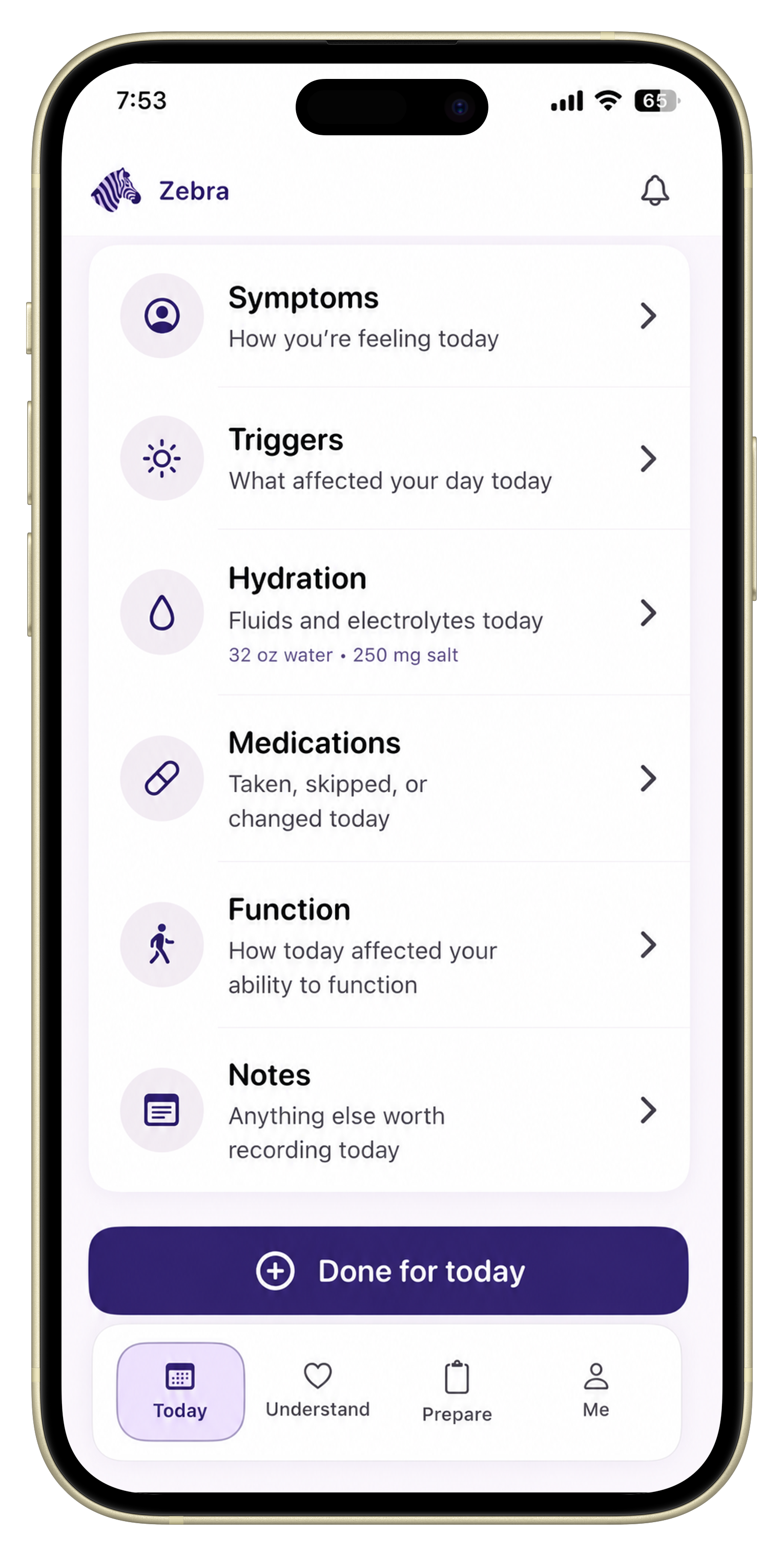
Zebra helps keep symptoms, delayed crashes, activity context, functional impact, medications, vitals, notes, and appointment questions in one timeline.
It does not diagnose Long COVID or decide what treatment is right for you. It helps you bring a clearer record to the clinician who can.
Track the main symptom domains, delayed worsening after activity, dizziness or fast heart rate when upright, breathlessness, sleep, medications, functional impact, and questions for your clinician.
Yes, but keep it low-effort. Track the activity or stressor, when symptoms worsened, what changed, and how long recovery took.
No. Tracking can organize your history for a healthcare visit, but Long COVID diagnosis and treatment decisions require clinical evaluation.
Use the minimum useful entry: what changed most, what happened nearby, what it stopped you from doing, and one question for your appointment.
No. Zebra helps organize patient-entered history for appointments. It does not diagnose, treat, or replace medical care.
Put this into practice
Use Zebra to keep Long COVID symptoms, activity context, delayed crashes, medications, and appointment questions in one timeline.
Download ZebraKnowledge hub
Keep exploring
A practical guide to tracking exercise intolerance, activity type, position, duration, intensity, heart rate, dizziness, fatigue, delayed worsening, recovery, and appointment summaries.
A practical guide to tracking sick-day POTS flares, infection symptoms, fever, hydration, salt, medication timing, heart rate, dizziness, fatigue, recovery, and doctor-ready summaries.
A practical guide to tracking cycle-related flares, POTS symptoms, fibromyalgia pain, fatigue, brain fog, GI symptoms, medications, and appointment questions.
A practical guide to tracking morning POTS symptoms, getting out of bed, hydration, salt, breakfast, medication timing, heart rate, blood pressure, dizziness, brain fog, recovery, and doctor-ready summaries.