Palpitations and Racing Heart Symptom Diary: What to Track
A practical guide to tracking palpitations, racing heart, skipped beats, heart rate, posture, dizziness, triggers, medication context, recovery, and appointment-ready summaries.

Zebra
For invisible chronic illness
Dysautonomia
Pre-syncope can feel hard to explain because you may not fully faint. Track the warning signs, posture, timing, triggers, recovery, vitals, medications, hydration, and daily impact so your clinician can see the pattern behind the episode.

Pre-syncope is the “I might faint” feeling that does not always become full syncope. It can be brief, strange, and hard to describe later. You may remember the fear of it more clearly than the details.
That is why tracking helps. A short note made soon after an episode can show your clinician what happened, what position you were in, what may have triggered it, how long recovery took, and how it affected your day.
This is especially useful when symptoms overlap with dysautonomia, POTS, or orthostatic intolerance. The goal is not to diagnose yourself. The goal is to make the pattern easier to review.
Start with what you felt before the episode peaked.
Useful warning signs include:
If you cannot write much, use a simple phrase like “vision closing in, hot, shaky, had to lie down.” That is enough to preserve the episode.
For dysautonomia and orthostatic symptoms, position matters.
Track:
The American College of Cardiology, American Heart Association, and Heart Rhythm Society describe orthostatic intolerance as symptoms that develop on standing and improve with sitting or lying. That is why a posture note can be more useful than a long symptom paragraph.
Pre-syncope can happen when several stressors stack together.
Write down anything that applied:
You are not trying to prove one cause. You are collecting context so repeated episodes are easier to compare.
Recovery is often the missing detail.
After the episode, note:
“Recovered after 10 minutes” and “lost the rest of the day” are very different clinical stories.
If your clinician has asked you to monitor heart rate or blood pressure, pair numbers with position and timing.
For example:
Do not chase numbers during an unsafe episode. If you feel like you may faint, your first job is to get safe. Vitals are helpful only when collecting them does not put you at risk.
Some episodes need medical attention. Ask your clinician what should count as urgent for you.
In your tracker, mark:
MedlinePlus notes that fainting can sometimes signal a serious problem, so new, severe, or unexplained episodes are worth discussing with a healthcare professional.
Use this when your brain is foggy:
The best tracker is the one you can use while tired. Short and consistent beats perfect and forgotten.
Helpful background:
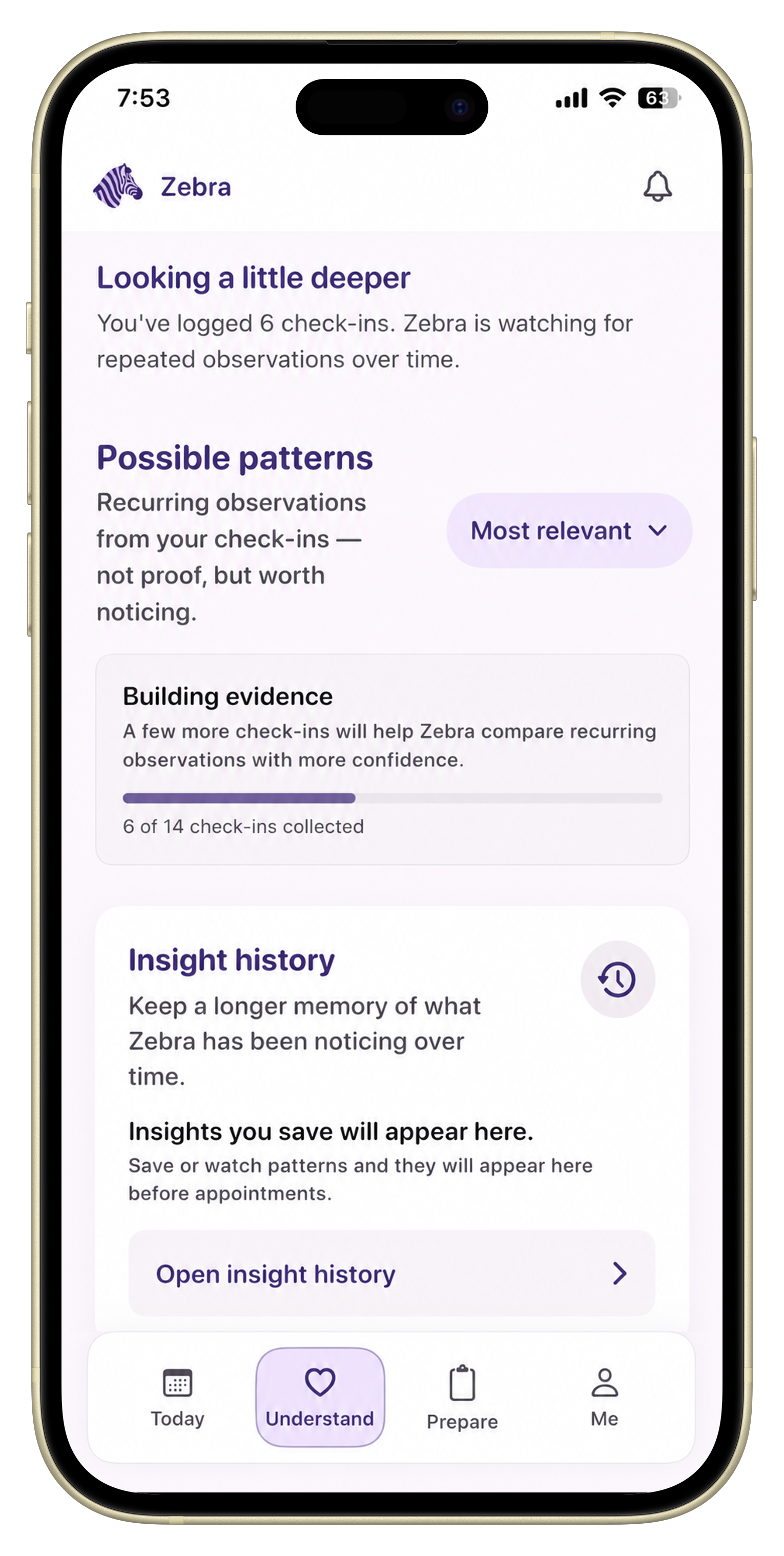
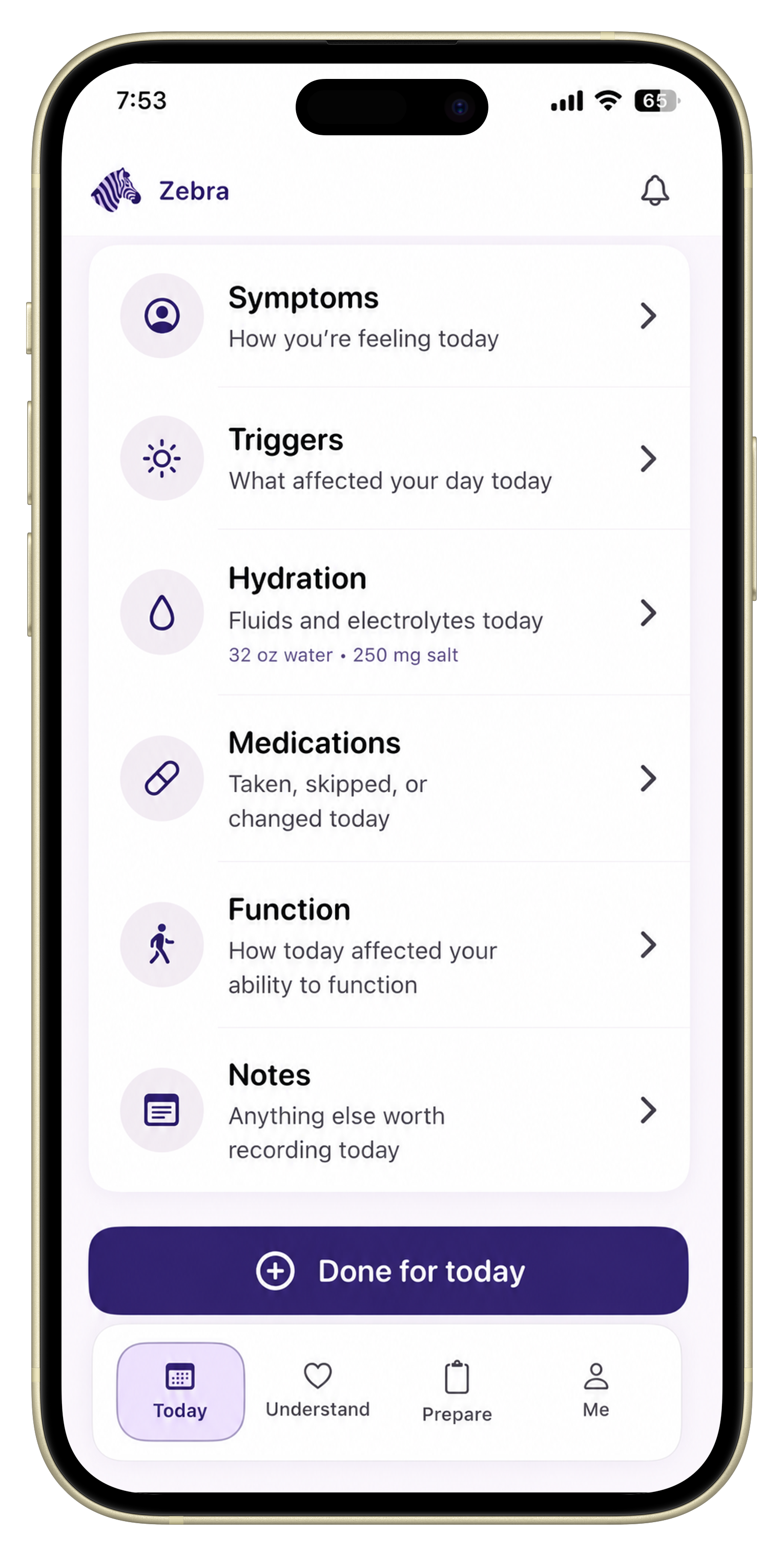
Zebra helps you keep near-fainting episodes in the same place as dizziness, lightheadedness, heart rate or blood pressure notes, hydration, salt, medications, triggers, and functional impact.
It does not tell you why an episode happened. It helps you bring a clearer timeline to the appointment.
Pre-syncope means feeling like you may faint without fully losing consciousness. It can include lightheadedness, weakness, nausea, sweating, vision changes, and feeling unsteady.
Track warning signs, posture, time upright, activity, triggers, recovery time, vitals if available, medications, hydration, salt, and what you had to stop doing.
Yes. Near-fainting episodes can still show a pattern, especially when they repeat with standing, heat, meals, showers, exertion, dehydration, or medication changes.
Ask your clinician which symptoms are urgent for you. Seek urgent care for concerning symptoms such as chest pain, trouble breathing, injury, new neurologic symptoms, or episodes that feel different or severe.
No. Zebra helps organize patient-entered history for appointments. It does not diagnose, treat, or replace medical care.
Put this into practice
Use Zebra to keep pre-syncope symptoms, triggers, vitals, hydration, medications, and appointment notes in one timeline.
Download ZebraKnowledge hub
Keep exploring
A practical guide to tracking palpitations, racing heart, skipped beats, heart rate, posture, dizziness, triggers, medication context, recovery, and appointment-ready summaries.
A practical guide to tracking blood pooling, leg or foot discoloration, swelling, heaviness, pain, standing time, posture, compression, hydration, salt, recovery, and appointment summaries.
A practical guide to tracking heat-triggered symptoms, warm rooms, hot showers, hydration, salt, heart rate, dizziness, sweating, cooling strategies, recovery, and doctor-ready summaries.
A practical guide to tracking sick-day POTS flares, infection symptoms, fever, hydration, salt, medication timing, heart rate, dizziness, fatigue, recovery, and doctor-ready summaries.