How to Track Symptoms When POTS, EDS, and MCAS Overlap
A practical tracking guide for people managing overlapping POTS, EDS or hEDS, and MCAS symptoms before appointments.

Zebra
For invisible chronic illness
EDS / hEDS
EDS and dysautonomia symptoms often overlap in ways that make day-to-day tracking and appointment prep confusing. Many people end up dealing with dizziness, fatigue, brain fog, exercise intolerance, pain, and function changes at the same time, even when those symptoms do not feel like they belong to just one label.
EDS, hEDS, and dysautonomia symptoms often overlap in ways that make day-to-day tracking and appointment prep confusing. Many people end up dealing with dizziness, fatigue, brain fog, exercise intolerance, pain, and changing daily function at the same time, even when those symptoms do not feel like they belong to just one label.
This is one reason overlap can be so hard to explain in care. The problem is not just symptom volume. It is symptom blur. When several symptoms rise and fall together, it becomes harder to remember what changed first, what clusters together, and what matters most to mention at your next appointment.
Overlap symptoms are often harder to track because the record can fragment quickly.
People often end up with:
That is why a whole-pattern record is usually more useful than isolated category notes. If you need the simpler general version of that problem, Why Symptom Tracking Fails on Bad Days explains why tracking often breaks when symptoms worsen.
Overlap can include:
That does not mean every symptom has the same source. It means the lived pattern is often intertwined.
For some people, the overlap also includes orthostatic intolerance, palpitations, shakiness, or symptoms that worsen after being upright longer. If that part of the picture matters, How to Track POTS Symptoms and Orthostatic Changes is a useful companion.
When symptoms overlap, it becomes easy to:
Tracking becomes more useful when the history stays organized around the whole pattern instead of forcing every symptom into a completely separate record.
This is especially true if the question is not “Which label explains everything?” but “What has actually been happening, and how is it affecting my life?”
Focus on:
This helps create a history that is still useful even when interpretation is still evolving.
If you want a practical model, combine:
That structure keeps the record usable even when the diagnosis conversation is still incomplete. For the appointment-prep version, How to Track Symptoms Before a Specialist Appointment and How to Organize Your Health History for a Doctor Visit help turn the pattern into something easier to review.
Common traps include:
If brain fog is part of the problem, How to Track Brain Fog Symptoms for a Doctor Appointment and How to Summarize Symptoms Without Forgetting Key Details can help keep the record lighter.
The strongest appointment summaries usually show:
That is often more useful than trying to defend one perfect explanation.
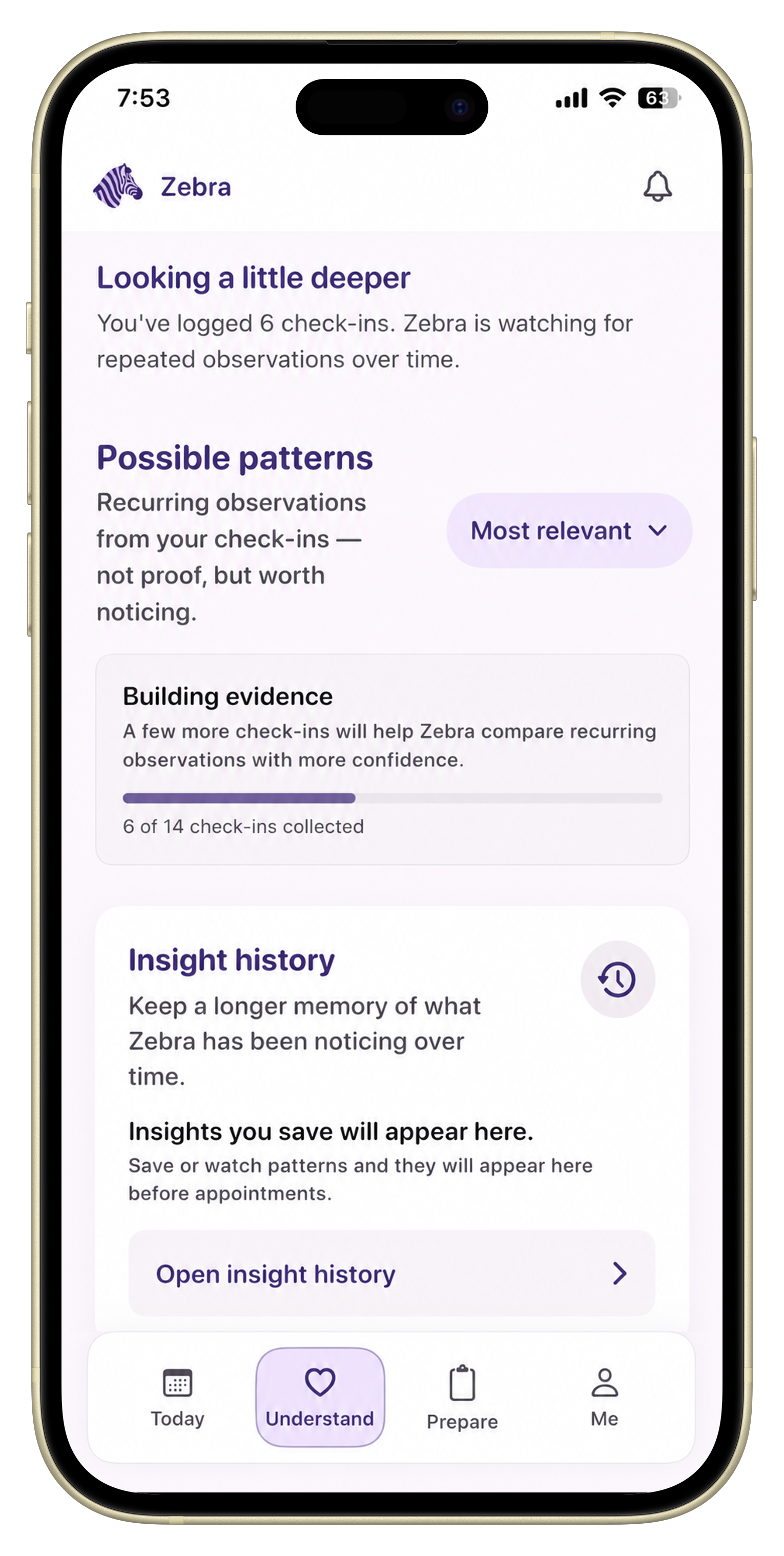
Zebra was positioned for exactly this kind of overlap problem. Instead of assuming one condition explains everything, it helps keep the lived record together so the story is easier to review and discuss.
Yes. Many people describe overlap in symptoms like fatigue, dizziness, brain fog, palpitations, and changing function.
Track symptoms, changes, flare patterns, position-related context, and function impact in one usable history instead of scattering them across different systems.
No. Tracking can help organize the history, but it does not replace clinical interpretation.
Usually it is more useful to keep them in one reviewable timeline so you can see what tends to happen together.
A short summary of what changed, what clusters together, what seems position-related, and what it is doing to daily life is usually easier to review than scattered notes.
Put this into practice
Use Zebra when overlap makes symptom history harder to keep clear.
Download ZebraKnowledge hub
Keep exploring
A practical tracking guide for people managing overlapping POTS, EDS or hEDS, and MCAS symptoms before appointments.
A practical workflow for keeping EDS and dysautonomia overlap symptoms in one clear, usable record.
A practical guide to tracking sick-day POTS flares, infection symptoms, fever, hydration, salt, medication timing, heart rate, dizziness, fatigue, recovery, and doctor-ready summaries.
A practical guide to tracking POTS symptoms during flights, car rides, terminals, lines, missed meals, hydration changes, salt, compression, medication timing, fatigue, recovery, and travel planning.